An electrolux washer ef2 error means too much detergent: the machine has detected excess suds and stopped rather than fighting them. It travels with two siblings that owners meet just as often. EF5 means the fill water is arriving at the wrong temperature, and EF8 means a key on the control panel is stuck. None of the three is a mechanical failure of the wash system, and two of them are usually fixed without a technician.
What does the EF2 error mean on an Electrolux washer?
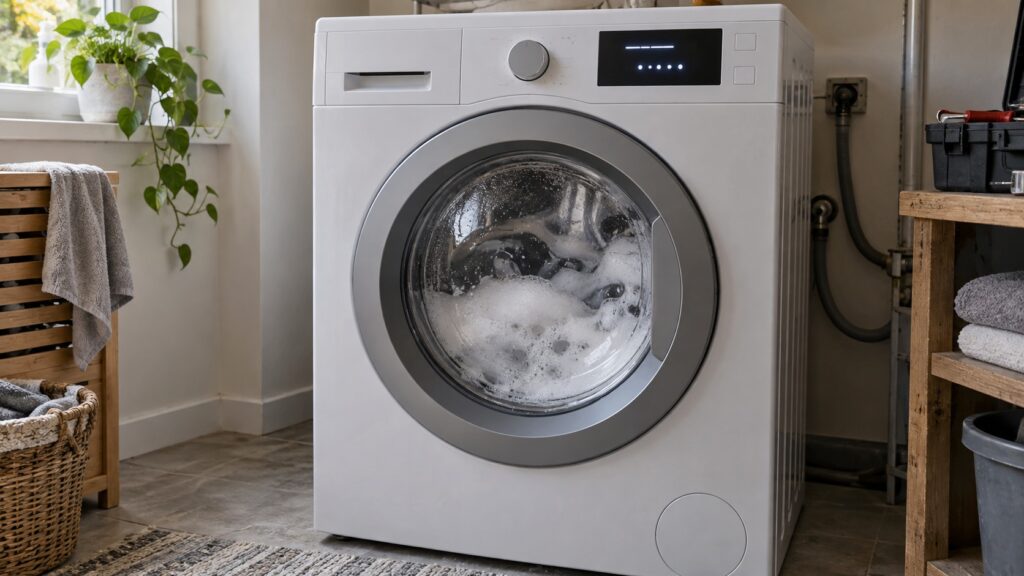
A front-load washer uses a fraction of the water a top loader does, so detergent concentration is high by design and the margin for overdosing is small. The control watches how the drum behaves — how the load moves, how the water level reads during the cycle — and when the signature says foam rather than water, it reports EF2 and stops adding to the problem.
The single cause listed on the code page is exactly that: too much detergent, producing excess suds beyond what the washer can manage. Not a pump, not a valve, not a board. The machine is describing what went into it.
The immediate fix is a rinse-and-spin cycle with no detergent at all, repeated if foam is still visible through the door glass. Then dose the next wash below the cap line and see whether the code returns.
How much detergent is too much?
Three things decide the right dose, and the bottle knows only one of them.
Load size. Half a drum takes roughly half the detergent. Most households pour a full dose every time.
Soil level. The label figure assumes a full load of genuinely dirty laundry, which describes very few of the washes any of us actually run.
Water hardness. Hard water consumes detergent before it can work on fabric; softened water does not. On a softened supply the correct amount can be half the label figure, and using the label figure foams every time.
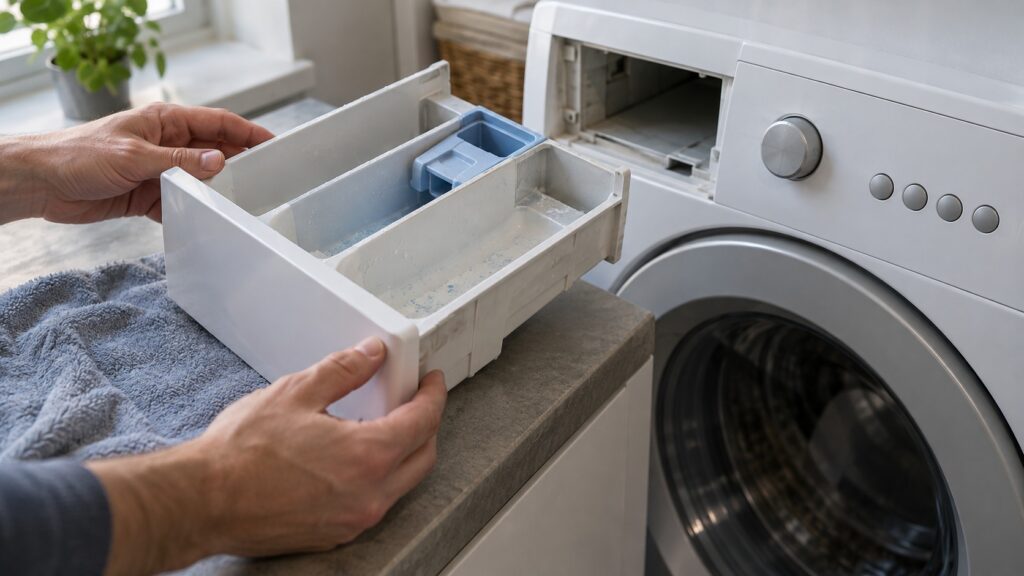
Only HE detergent belongs in a front loader — standard formulas foam past what any front-load machine can rinse away. If your washer premixes detergent before it reaches the load, dosing matters even more, and our SmartBoost dosing guide goes through the habits that work against that system.
What does EF5 mean, and why is it usually the water heater?
EF5 means incorrect fill water temperature. The listed causes put the household first: a water heater or supply problem delivering water at the wrong temperature, and — less commonly — a failed water inlet valve.
The everyday version is mundane. Hoses are reversed, so hot arrives where the machine expects cold. A water heater is set low, or has been recovering since the last shower, and a warm cycle never reaches the temperature the program was written around. A shut-off valve was left half closed after a plumbing job, so one side trickles.
Check the obvious in this order: both shut-off valves fully open, hot on the hot connection and cold on the cold, the inlet screens at the back of the machine clear of grit, and a hot tap at a nearby sink actually producing hot water within a reasonable time. If all four are right and EF5 stays, the inlet valve becomes the candidate and that is a service call.
What does EF8 mean when nobody is touching the panel?
EF8 means a stuck or damaged control panel button — a membrane switch reading as held down. The control refuses to start a cycle because, as far as it can tell, someone has a finger on a key.
Two causes account for most of it. Spills and cleaning sprays get behind the membrane and leave residue that holds a contact closed; wipe the panel with a barely damp cloth, never a spray aimed at the controls, and let it dry completely. Or a key has been pressed hard enough over years that the dome no longer returns. A power cycle at the breaker sometimes clears a momentary version, but a membrane switch that has genuinely failed needs the panel assembly replaced.
How do EF2, EF5 and EF8 differ from EF0 and EF1?
The EF prefix covers unrelated subsystems, so the number carries all the meaning.
EF0 and EF2 overlap in one place: foam. EF0 is about water that will not leave, with foam as one reason; EF2 is about foam itself, before drainage becomes the issue. If your machine is showing EF0, start with our Electrolux washer EF0 guide, which covers the drain path, the pump filter and the suds lock in detail. The full list with severity ratings lives on the EF2 code page.
What should you do before calling?
- For EF2: run rinse and spin with no detergent, twice if foam persists, then halve the dose.
- Switch to HE detergent if you are not using one, and dose for the load rather than the cap.
- For EF5: confirm both valves are open, the hoses are not reversed and the inlet screens are clear.
- For EF8: clean the panel with a damp cloth, dry it, then power cycle at the breaker for thirty seconds.
- Run a drum-clean cycle afterward to clear residue left by months of overdosing.
- Note the exact code, the cycle it appears in, and the model and serial number.
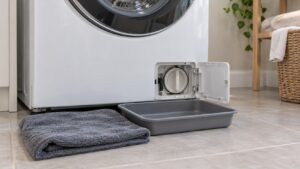
Do not open the pump filter door while the drum still holds water, and do not force the door lock on a machine mid-cycle. Both put several gallons on the floor and the second can damage the lock assembly.
When does this need a technician?
Call when EF2 returns after two corrected washes, when EF5 survives the checks above, when EF8 comes back after cleaning and a reset, or when more than one EF code alternates. Regular drum and gasket care prevents a share of these, and our washer maintenance guide sets out the routine.
We are an independent repair company and not a factory service arm. Pricing starts from a diagnostic visit and we confirm the estimate before any work begins. Electrolux washer repair covers inlet valves, pressure sensors, pumps, door locks and control panels. You can schedule a visit online or call (844) 414-1609.