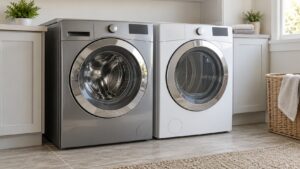
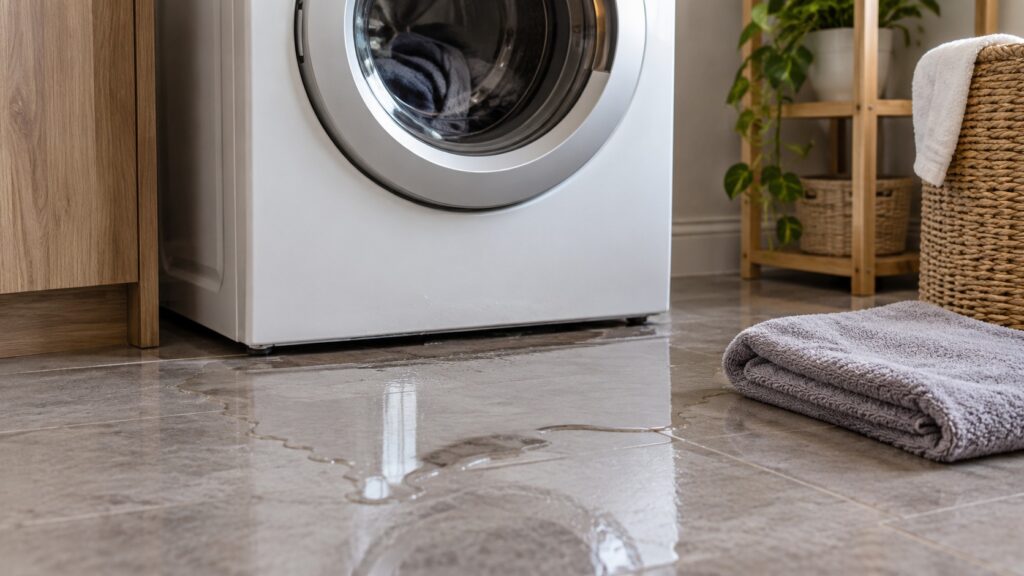
An Electrolux washer leaking water leaks from one of a few places: the rubber door boot, the detergent drawer and dispenser area, the drain pump filter or drain hose, an inlet hose connection, or from inside the cabinet. Where the water first appears tells you which. Stop the washer, dry the floor, and watch a short rinse and spin. A leak you cannot see from outside, or one that comes with an E13 code, needs a technician, because our site describes E13 as a genuine leak rather than a nuisance code.
Why is my Electrolux washer leaking water?
Almost every leak starts at a seal, a connection or a drawer, and only a few start inside. Start by working out when the water appears: at the start of the fill, during the wash, or during the drain and spin. Water at the start of the cycle points at the supply side, water during the wash points at the door, the drawer or the tub, and water at the end points at the drain path. Dry the floor and the front of the washer, put a dry towel down, and run a short rinse and spin while you watch. If water reaches the outlet or the cord at any point, switch off the breaker at the panel while standing on a dry floor, and never pull a plug from a wet outlet.
Could the door boot be leaking?
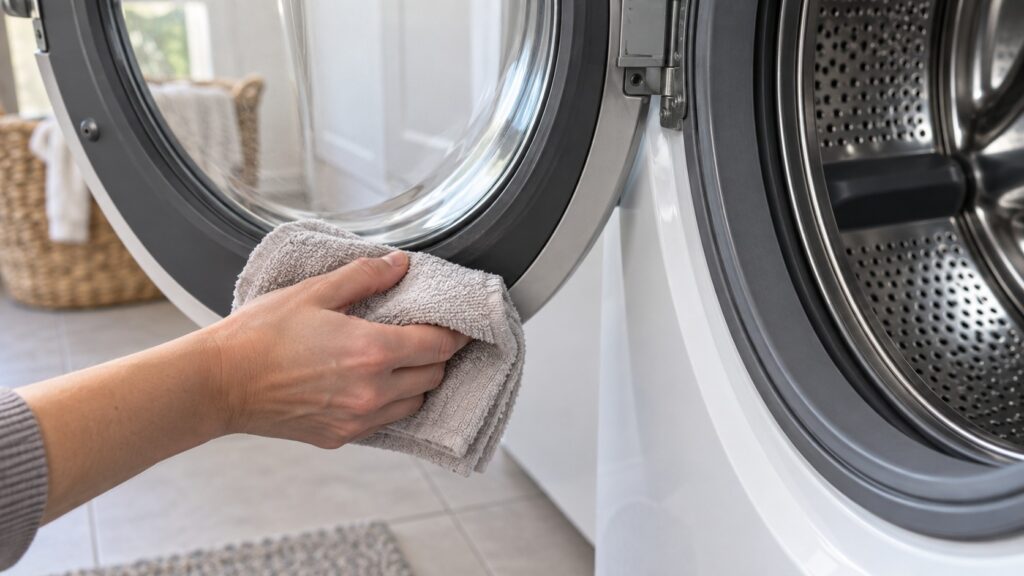
It is the first place to check on a front-load washer. Our E13 guide says to open the door and run a hand around the full circumference of the rubber door boot, feeling for a tear, a stiff or cracked section or trapped debris holding the seal open slightly. Our washer maintenance guide says to fold back the boot after a few loads and wipe out water, lint and debris, because that is where musty smells start. A coin, a hair clip or a sock caught in the fold can keep the boot from sealing against the glass. If the boot looks torn, do not keep running loads; replacing it is a technician’s job.
Why does water leak from the soap dispenser drawer?
The usual suspect is detergent. Our site says over-dosing leaves residue and causes excess suds, and that a partly blocked compartment delivers erratically. Foam looks like water when it runs out of the front of the machine, so a washer that “leaks” from the drawer after a big dose of detergent may be overflowing suds, not water. Use HE detergent only, dose for the load, and pull out and rinse the drawer to clear caked detergent and softener buildup, as our maintenance guide advises. See our SmartBoost detergent tips for how to dose. How the drawer is built, and whether it comes out of your model, is in your owner’s manual. If the drawer is clean, the dose is right and water still comes out of that area, that is a fault for a technician to find.
Is it the drain pump filter or the hoses?
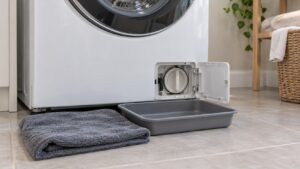
Check these two next. The drain pump filter sits behind a small panel at the lower front, and a filter that is not fully reseated after cleaning can drip. Our washer not draining guide describes the filter, the pump and the drain hose; a drain hose should not be kinked and its clamps should be secure, and the E13 guide tells you to check that the drain hose and clamps are not the actual source of the water. At the back of the washer, look at the two inlet hose connections and the taps. Our maintenance guide suggests checking the inlet hoses once a year for bulges or cracks. If a hose is bulging, cracked or dripping at a coupling, turn off the taps and book a visit rather than overtightening it.
What does E13 mean for a leaking washer?
E13 means the washer has detected a water leak in the outer tub area, or an air leak in the air-bell that it uses to measure the water level. Our E13 page lists a torn or blocked pressure hose or air-bell, a tub-seal leak and a faulty pressure sensor, and says not to attempt to open or service the air-bell or pressure hose yourself. It rates the condition as high severity and suggests stopping use until the source is confirmed. The E13 guide adds that the air-dome hose or its connection sits inside the cabinet and needs a panel removed to inspect properly; do not open panels, because that is a technician’s job. Also keep in mind that our EF0 page says that, less often, an internal leak can trip the base-pan flood switch.
What should you do while you wait for service?
Stop the washer from its control panel and turn the water taps off. If water has reached the plug, the cord or the outlet, switch off the breaker at the panel while standing on a dry floor, and never pull a plug from a wet outlet. Otherwise dry the floor and keep a towel at the front. If there is water in the drum, do not open the door against it; our EF0 guide says to cancel and select a drain or spin program, and mentions an emergency drain hose beside the pump filter for emptying the water into a shallow tray. Take a photo of where the water appears and note whether the washer showed a code. When you book, have the model and serial number ready. Read about Electrolux washer repair to see how a visit works.