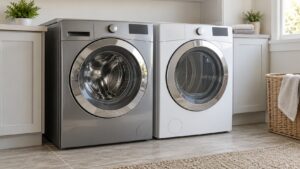
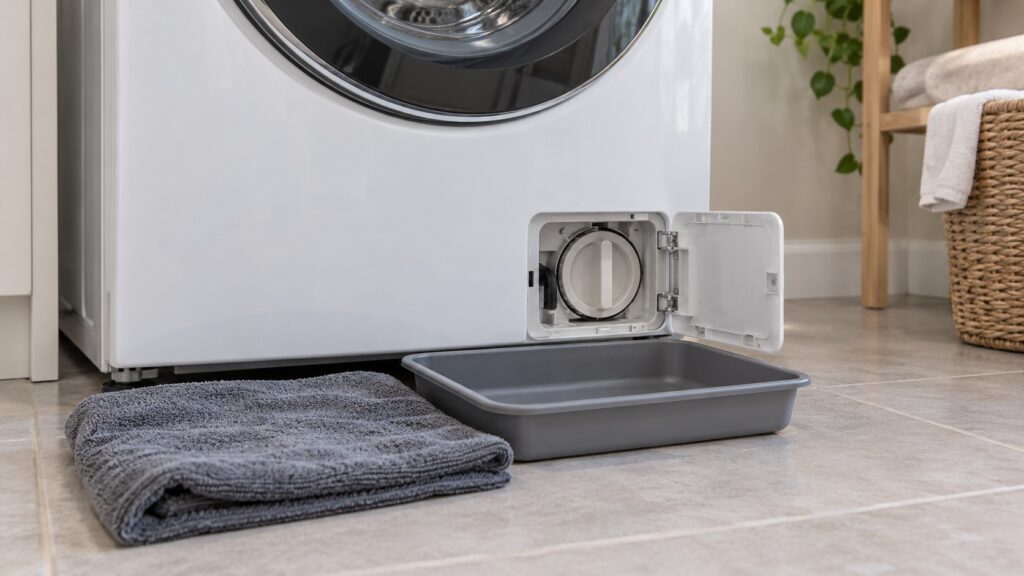
The Electrolux washer drain pump filter is a small, screw-in catch basket behind the access panel at the lower front of a front-load washer. It traps coins, lint and the odd sock before they reach the pump, so cleaning it every month or two is the single most useful maintenance job on the machine. Switch the washer off, set a shallow pan and towels under the panel, unscrew the filter slowly to let the trapped water out, rinse it, and reseat it firmly.
Where is the drain pump filter on an Electrolux washer?
On an Electrolux front-load washer the filter is behind a small panel at the lower front corner of the cabinet. Our washer pages describe it as the access-panel filter in front of the drain pump: used water leaves the drum, passes the filter, and is then pushed out through the drain hose. The exact panel, how it opens and how the filter cap turns differ by model, so check your owner’s manual for the panel on your washer. If the manual or the markings on the panel show a way to open it without tools, use that; if the panel looks like it needs a screwdriver and removal of other parts, stop and book a visit, because we only describe the owner-level access panel here.
Why does the filter need cleaning at all?
Because it is doing its job. Everything small enough to slip out of a pocket or off a garment ends up in the water path, and the filter is where it stops. Our Electrolux washer maintenance guide calls a clogged filter the leading cause of slow draining, and our washer not draining guide starts with the same step. The site also lists two codes that point straight at it: EF1 means the drain pump filter is clogged or blocked, and E21 means a long or slow pump-out, where the filter is one of two things to check along with the drain hose.
How do you clean the drain pump filter step by step?
Work slowly and keep the floor dry. The steps below follow what our washer pages describe; for anything model-specific, such as how the panel opens, follow your owner’s manual.
- Switch the washer off at the control panel and finish or stop the cycle. If there is a puddle near the plug or the outlet, do not touch the cord; switch the breaker off at the panel while standing on a dry floor.
- Open the small access panel at the lower front.
- Put a shallow pan and several towels directly under the filter. Water will come out when you open it, so do not skip this. If the last cycle was a hot one, the water can be hot, so let the washer stand and cool before you open the filter.
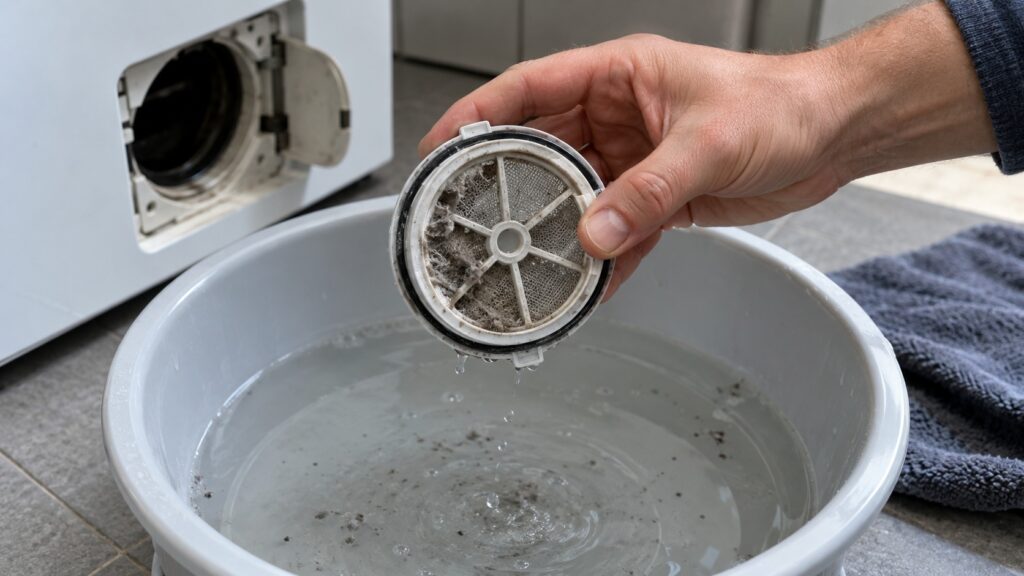
- Turn the filter slowly, a little at a time, so the trapped water drains into the pan instead of rushing out at once. If the pan fills, stop turning, empty it and continue.
- Take the filter out and clear away lint, coins and debris. Rinse it under running water until the mesh and threads are clean.
- Look into the opening for anything stuck behind the filter. Our drain guide says the impeller behind it should turn freely. If something is jammed and will not come out with a gentle touch, stop there.
- Reseat the filter firmly, turning it until it is fully tight by hand, and close the panel.
- Run a short rinse and spin to confirm the water drains and there are no drips at the panel.
How often should you clean it?
Our maintenance guide says every month or two. In practice, base it on your laundry: a household that washes small children’s clothes, pet bedding or pocket-heavy work clothes collects debris faster than one that washes towels and sheets. Attach the job to something you already do, such as the monthly tub-clean cycle, so it does not slide for six months. Emptying pockets before loading is the cheapest prevention there is, because coins and small items are the biggest single cause of a clogged filter. Cutting back to the HE detergent amount also helps, since suds and residue build up in the filter and hose faster than ordinary soil does; see our EF0 guide for what over-sudsing looks like.
What if the filter is clean and the washer still will not drain?
Check the drain hose next: it should not be kinked behind the washer and should not be pushed too far into the standpipe. Our drain guide treats a kinked or over-inserted hose as the same symptom as a clogged filter. If the filter, the impeller and the hose are all clear and water is still left in the drum, the drain pump is the usual remaining cause, and testing or replacing it is a technician’s job. Do not open the cabinet or remove other panels to look for it. A washer that holds water also tends not to spin, so a drum of wet clothes at the end of a cycle is a good moment to stop and book a visit rather than keep re-running it.
What should you avoid when cleaning the filter?
Do not force a cap that will not turn, and do not use tools to pry the panel open; a cracked cap or a damaged thread turns a simple job into a leak. Do not leave the filter loose, because a filter that is not fully reseated can drip or leak during the next cycle. Do not run the washer with the panel open, and do not open the filter while the water is hot. And do not pour water into the filter opening to test it; run a short cycle instead. If you see water running toward the plug or a nearby outlet at any point, switch off the breaker at the panel while standing on a dry floor, and never pull a plug from a wet outlet.