An Electrolux refrigerator water filter should be replaced roughly every six months under normal use, sooner if the household runs the ice maker and dispenser heavily, and the clearest sign it is overdue is a drop in flow rate long before the water tastes noticeably different. Waiting for taste or smell to change means running weeks or months past the point the filter stopped doing its job well.
How often does an Electrolux water filter really need replacing?
Around six months is the standard interval most Electrolux refrigerators are designed around, and it assumes typical household water use through the dispenser and ice maker. That number is a design target, not a guarantee — actual filter life depends on how much water passes through it and how much sediment or mineral content is in the supply feeding it, so two identical refrigerators on two different water supplies can wear out a filter at noticeably different rates.
What speeds up how quickly the filter wears out?
Three things shorten the interval reliably: a large household that runs the dispenser and ice maker often, a well-water supply with more sediment or mineral content than municipal water typically carries, and an ice maker set to make more ice than the household actually uses, which cycles water through the filter constantly even when no one is drinking it. Any one of these can cut the six-month interval down to three or four months, and more than one together can shorten it further.
What’s the first sign a filter needs changing?
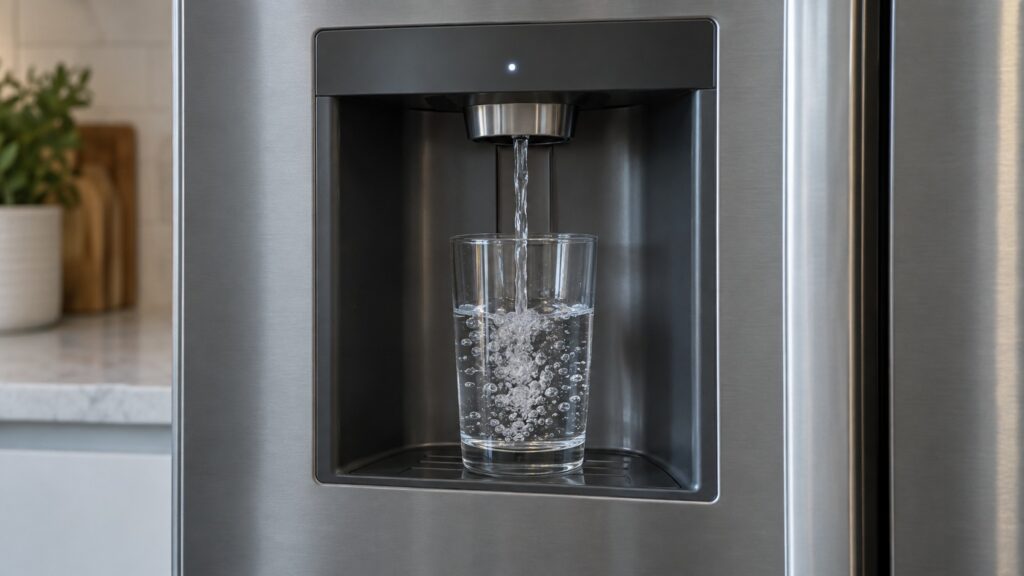
Flow rate drops before taste does. A dispenser that used to fill a glass quickly and now takes noticeably longer, or an ice maker that seems to be making smaller batches or taking longer between batches, is usually the filter losing capacity rather than a plumbing or ice-maker fault. Taste and odor changes tend to show up only after the filter has been restricting flow for a while, so relying on taste alone means the filter has likely been under-performing for weeks already.
Where is the water filter located on an Electrolux refrigerator?
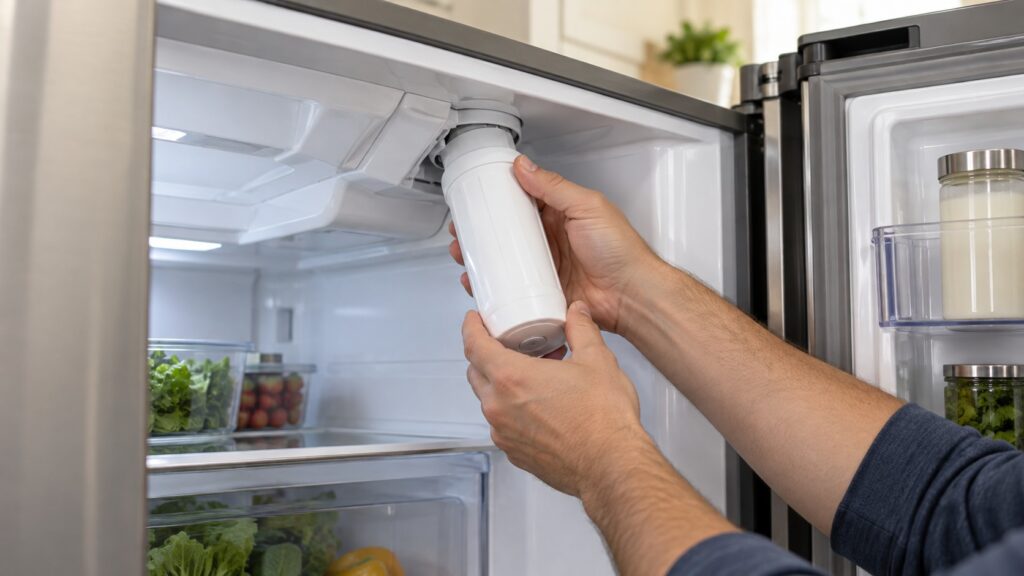
Location varies by model family: some put the cartridge in the upper-right area inside the refrigerator compartment, some place it in the base grille near the floor, and some tuck it behind a crisper drawer that has to be removed first. The model’s own manual is the fastest way to confirm which layout applies, since guessing based on a different refrigerator in the same kitchen — or a different model seen online — often points at the wrong compartment entirely.
Do you need to reset anything after installing a new filter?
On most Electrolux refrigerators, yes. A new cartridge going in does not automatically clear the “replace filter” indicator on the control panel; that usually needs a manual reset, either a dedicated button near the filter housing or a menu option on the display. Skipping that step leaves the indicator showing a false warning for months, which trains a household to ignore the indicator altogether — exactly the habit that leads to a filter running well past when it should have been changed.
What happens if the filter is never replaced?
The refrigerator keeps dispensing water and making ice either way — a clogged or expired filter does not stop the appliance from working, it just stops filtering effectively, and eventually restricts flow enough to slow the ice maker and dispenser noticeably. This is why a slow dispenser or a stalled ice maker is worth checking against filter age before assuming a mechanical part has failed; it is one of the least expensive things to rule out first.
Beyond flow rate, an overdue filter also loses its ability to reduce the sediment, chlorine taste and odor it was originally rated to handle, so water and ice quality drift down gradually rather than failing all at once. Because that decline is so gradual, many households do not notice it until they taste water from a freshly changed filter side by side with what they had gotten used to — at which point the difference is obvious. Keeping a simple written or phone reminder tied to the six-month interval, rather than relying on the household to notice a slow decline, is the most reliable way to stay ahead of it.
Does the filter need a flush after every replacement?
Yes, and skipping it is the most common reason a fresh filter gets blamed for a taste problem it did not cause. A new cartridge is dry, and running several glasses of water through the dispenser after installation clears trapped air and loose carbon dust from the housing before that first water is used for drinking or ice. Discarding the first batch or two of ice after a filter change follows the same logic — that ice forms from the same unflushed water and can carry a faint plastic or carbon taste that clears within a day of normal use.
Is a third-party filter a safe substitute for the Electrolux-specified one?
Only if it is rated for the exact model and certified to the same filtration standard as the original. Filter housings across refrigerator brands are not universal, and a cartridge that physically fits a housing is not proof that its filtration media or its flow rate matches what the appliance was designed around. A filter that restricts flow more than specified can make the ice maker and dispenser seem to be malfunctioning when the filter itself is the actual cause — which is worth ruling out before assuming a part inside the refrigerator has failed.
Confirming the exact filter part number for the specific refrigerator model, rather than a filter marketed as a general “compatible” replacement, is worth the extra minute before ordering. Two Electrolux refrigerators that look similar on the outside can still use different filter cartridges internally, and a filter that seats in the housing but was designed for a different flow rate will not restore full performance even though it appears to be working.
For the wider mechanical picture, our refrigerator ice maker not making ice guide and water dispenser not working guide both cover what to check once a fresh filter has been ruled out, and our refrigerator maintenance guide covers the rest of the routine care around the filter change. If the ice maker or dispenser is still slow after a filter swap and a reset, schedule Electrolux refrigerator repair or book a visit and mention the filter’s age.