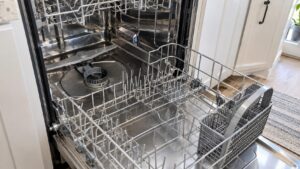
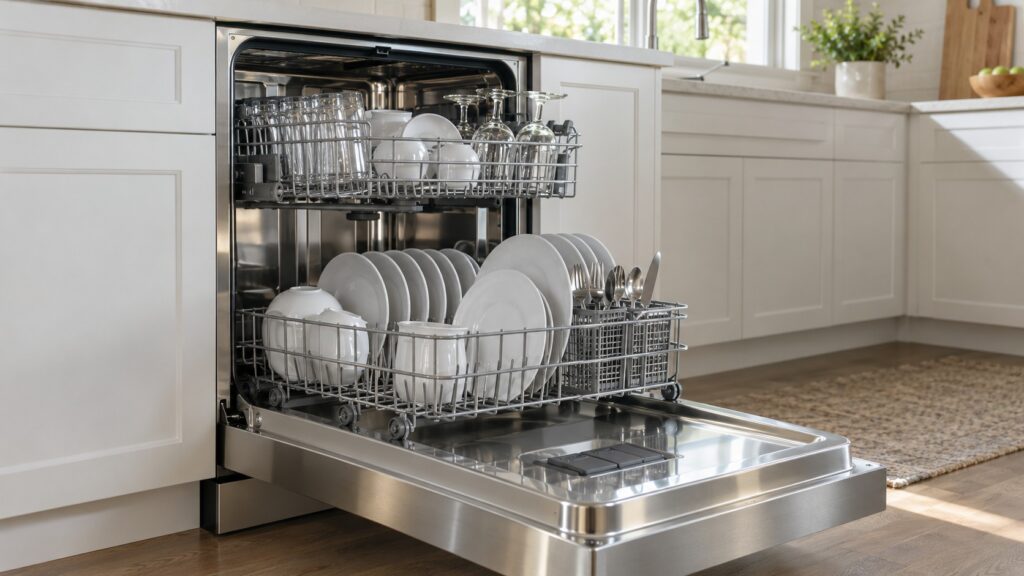
Electrolux dishwasher loading comes down to one idea: water has to reach every dirty surface, so every item needs to face the spray, nothing should block a spray arm, and the filter area must stay free of food. Load dinner plates in the lower rack facing the center, bowls and pots angled down, cups and glasses in the upper rack tilted so water drains off, and stemware in the dedicated zone if your model has one. Most complaints of dishes that come out dirty, wet or spotted trace to loading habits rather than to a fault, and the same habits that fix them also reduce the drain and fill codes that bring owners to us.
How should you load the lower rack of an Electrolux dishwasher?
The lower rack takes the dirtiest, heaviest items, and it sits closest to the lower spray arm, so face dirty surfaces toward the center where the water comes from. Put dinner plates in a row, slightly angled, with the soiled side toward the middle, and do not let them touch. Place bowls and pots upside down or angled so they do not hold water. Large platters and cookie sheets go along the edges or the back, so they do not shield the items behind them from the spray. If a big item must stand upright in the center, expect the area behind it to come out dirty.
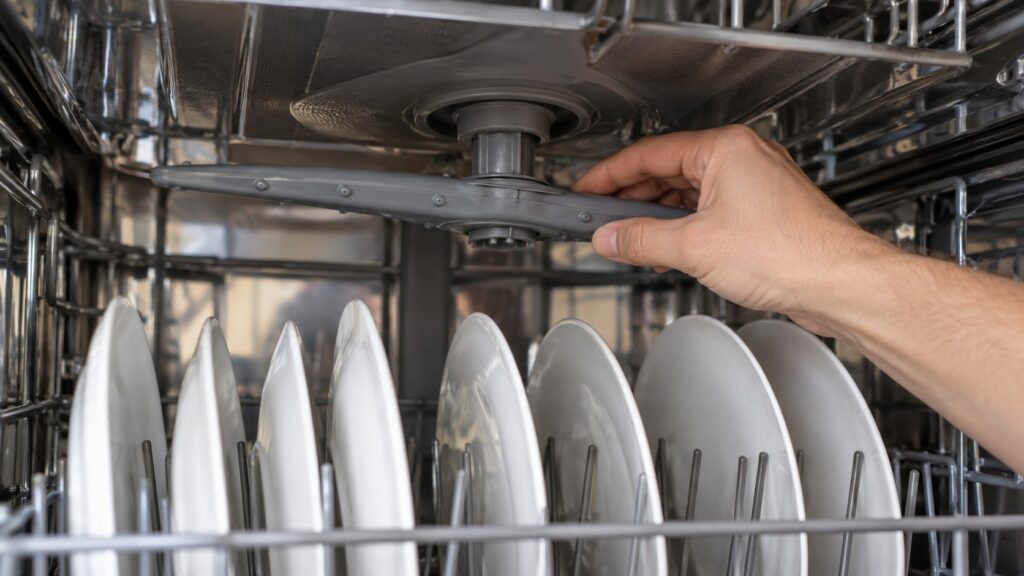
Keep the rack from becoming a solid wall. Dishes packed edge to edge leave no path for water, and a rack stacked with oversized pans can also block the door of the detergent dispenser from opening. Before you close the door, give the lower spray arm a spin with your finger. If it catches on a handle or a pot, the arm cannot wash and that part of the load will come out dirty.
What goes in the upper rack, and what is a stemware zone?
The upper rack is for cups, glasses, small bowls and plastics. Tilt cups and glasses so the open end faces down and slightly toward the back, which stops them from collecting water in the base. Plastics belong here only, away from the heating element and the heat of the lower rack, and they will often come out wetter than glass because plastic does not hold heat. Our guide to a dishwasher that is not drying explains why, and what to do about it.
The EI24ID81SS has a Perfect Stemware wash zone, a spot in the rack designed for glassware with stems. Use it for wine glasses so they sit securely and do not clink against other items. Do not load fragile crystal or hand-painted glass at all unless the maker says it is dishwasher safe. For models with a Satellite Spray Arm, such as the EI24ID50QS, the arm covers a wider area, but it still needs room to turn, so keep tall items away from its path.
How do you load the cutlery basket and awkward items?
Mix forks, knives and spoons in the basket rather than packing them in groups, because spoons nested together hold food between them. Point knife blades down so nobody is cut when unloading, and alternate forks and spoons head up and head down so they cannot nest. Wash by hand anything the maker advises against: wooden items, cast iron, good kitchen knives, items with glued handles and thin aluminum. Place long utensils flat on top of the upper rack so they do not hang through to the arm below.
Should you rinse dishes before you load them?
Scrape, do not rinse. Remove bones, seeds, peels and large scraps, since they can clog the filter and the drain. Modern dishwashers and detergents are built to work on some food soil, and a heavy pre-rinse wastes water and can leave a cleaner with nothing to act on. Check the manual for your model. Scraping matters more than it seems: on US models, our i40 page describes food soil building up in the filter and sump area, and the Electrolux dishwasher i20 guide covers water that stays past the drain window, usually a blocked filter or hose. Both are loading and filter habits more often than failures. Our filter cleaning guide shows how to keep the filter clear.
How much detergent should you use?
Use the amount your manual and your detergent maker specify, and no more. Too much detergent or rinse aid makes foam, and foam can confuse the water-level sensing. Our page on the iF0 code describes a water-level sensing problem, usually from foam or debris. Put a pod or powder in the dispenser, not loose in the tub, and close the dispenser fully. Hard water needs more attention to rinse aid and an occasional cleaning cycle, and our dishwasher maintenance guide covers the routine.
What should you avoid doing mid-cycle?
Do not open the door during a cycle unless you must, because the dishwasher stops and the display may show CL, which on our site is a status indicator for a door that is open or not fully latched. Hot water and steam can come out when you open the door during a wash, so stand back and open slowly. Do not add a dish after the main wash has begun, since detergent may already be spent. After the cycle, let the load rest a few minutes with the door slightly open to help drying, and unload the lower rack first so water on top of upper-rack cups does not drip on dry plates.
How do you know loading is the problem and not the machine?
Load the dishwasher with a modest number of items, nothing blocking the arms, and a clean filter. If the dishes still come out dirty, if a code returns, or if water remains at the bottom after the cycle, the machine needs a look. Our EIDW6000 series buying guide explains the differences between the models, and Electrolux dishwasher repair handles the visit. We are an independent service, so we will tell you when loading is the only fix. You can book a visit when you are ready.