The best Electrolux refrigerator storage tips come down to airflow, zones and timing: keep food away from the cold air vents, put raw meat low in sealed containers, store produce in the humidity drawers, and never pack shelves so tight that air cannot circulate. A refrigerator that is organized this way holds temperature more steadily, uses less energy and stops common complaints such as frozen lettuce, wet shelves and food that spoils early. These tips apply to the Electrolux refrigerators on our site, from the 36-inch E32AR85PQS and French-door models to the 28-inch EW28BS71IS and EI28BS series.
Where should I put each kind of food?
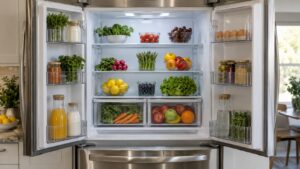
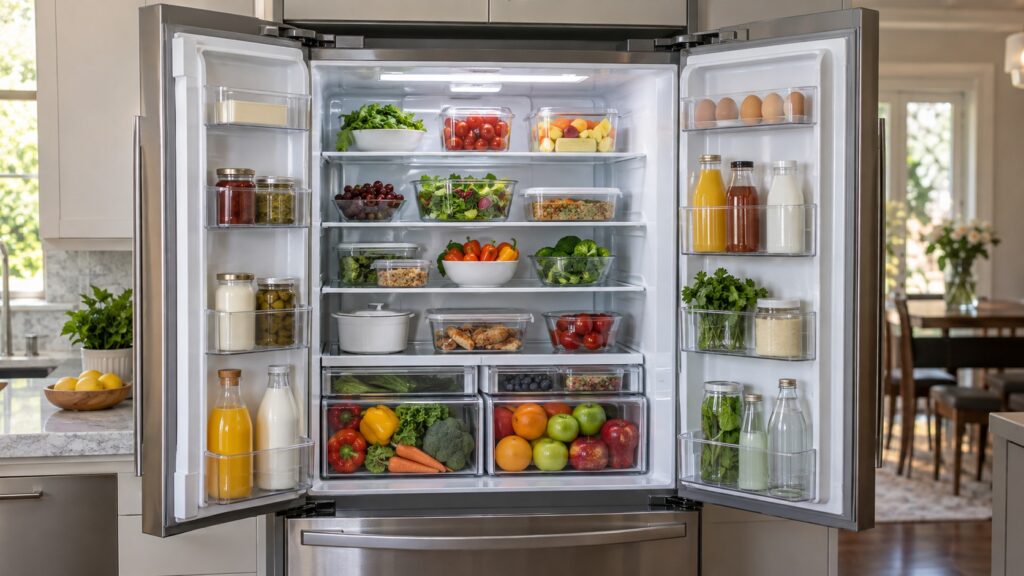
A refrigerator is colder at the back and bottom, and warmer in the door. Use that map. The lowest shelf is the coldest and the safest place for raw meat, poultry and fish, in a sealed container or on a tray so juices cannot drip onto food below. The middle shelves suit dairy, eggs in their carton and leftovers. The upper shelves suit ready-to-eat items and drinks. The door is the warmest zone, which is fine for condiments, juice and butter, but poor for milk. On Electrolux models with SpillSafe glass shelves, the raised edge holds a small spill on the shelf, but the advice stays the same: wipe spills promptly rather than relying on the edge.
How do I stop food freezing in the fresh-food section?
Frozen lettuce, solid yogurt or icy milk usually mean food is sitting against a cold air vent or the back wall, or the fresh-food setting is too cold. Move delicate items away from the rear of the shelf, keep a few inches of space around the vents, and avoid placing containers right in front of the air outlet. If food freezes even when well placed, see our symptom page on refrigerator freezing food, which covers sensors and dampers that cause it. Resist turning the temperature up and down repeatedly, since the refrigerator needs time to settle after each change.
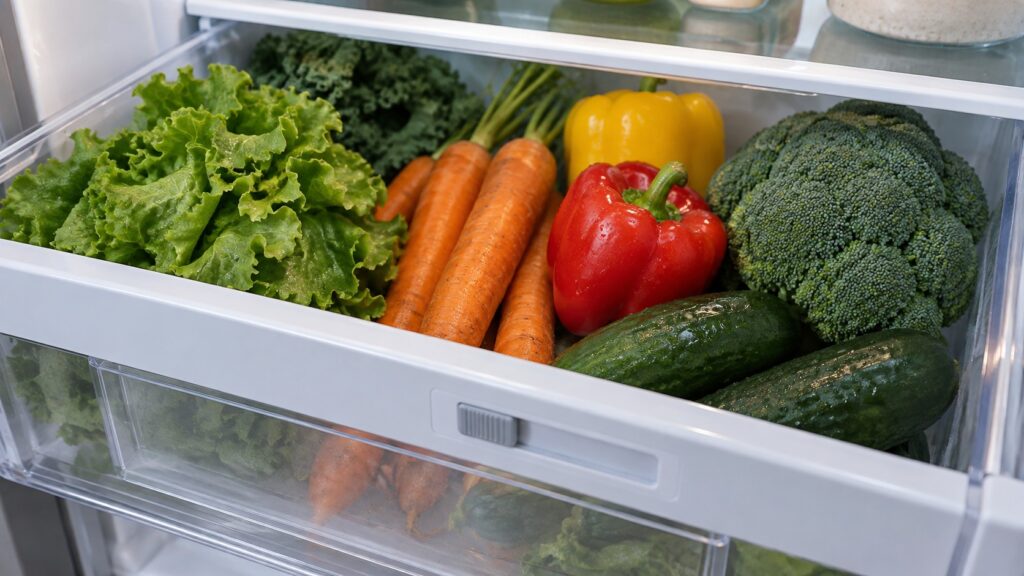
What are the best habits for produce drawers?
Humidity drawers work by adjusting how much moist air is held in. Set leafy greens, herbs and vegetables that wilt to the higher humidity setting, and fruit and vegetables that rot in moisture to the lower setting. Do not wash produce before storing it unless you dry it, since extra water speeds spoilage. Keep ethylene-producing fruit, such as apples and pears, away from greens. Line a drawer with a paper towel to absorb moisture, and clear out anything that has started to turn, because one spoiled item affects the rest.
How full should the refrigerator be?
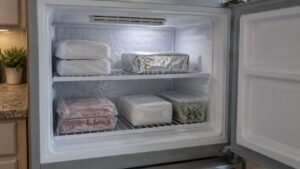
A reasonably full refrigerator holds cold well, because the food acts as thermal mass, but a packed one blocks airflow. Aim for gaps between containers and a clear path to the vents. Do not stack items against the back wall, and do not cover the glass shelves with foil or liners, which blocks air flow between shelves. The freezer is the opposite: a full freezer holds temperature better than a half-empty one, as long as air can still move. For the freezer side, our Electrolux freezer organization tips go into more depth.
How should I store leftovers, drinks and condiments?
Leftovers keep best in shallow, covered containers, because shallow food cools through all its depth quickly and a lid stops it from drying out and picking up other flavors. Label the container with the date, and use the oldest first. Store milk in the body of the refrigerator, not the door, since the door warms every time it opens. Put tall bottles in the door bins where they stand securely, and keep the door shelf from overloading, which strains the gasket and can hold the door slightly open. Eggs stay fresher in their carton on a shelf than in the door tray. Cooked food belongs above raw food, never below.
The same rules apply across the Electrolux models on our site, whether the refrigerator is a French-door, a side-by-side or a bottom-freezer layout. The layout changes where the vents sit, so after any rearranging check that the shelf in front of each vent stays open. If you have moved into a home with an Electrolux refrigerator already installed, check the temperature with a thermometer for a day before filling it, then adjust the controls once you know the real figures.
What daily habits protect the refrigerator?
Several small habits matter more than any setting. Let hot food cool for a short time before it goes in, but do not leave it out for more than two hours. Close the door fully every time; a door held ajar by a drawer or a tall bottle lets in humid air, which makes condensation and frost. Check that the door gasket seals by closing a sheet of paper in the door: if it slides out easily, the seal is weak. Wipe the gasket occasionally. Condensation on shelves is a sign of too much humid air, and our page on refrigerator condensation buildup explains the causes.
What upkeep keeps it running well?
Replace the water filter on schedule, as described in our water filter replacement schedule, and learn how PureAdvantage filtration works. Clean the condenser coils and check the drain, as set out in the Electrolux refrigerator maintenance guide. If the refrigerator is warm despite good habits, read why an Electrolux refrigerator is not cooling. For problems that remain, Electrolux refrigerator repair can diagnose the fault, and you can schedule a visit at any time.