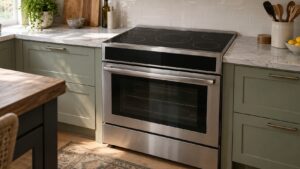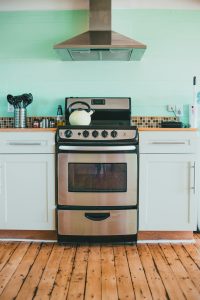
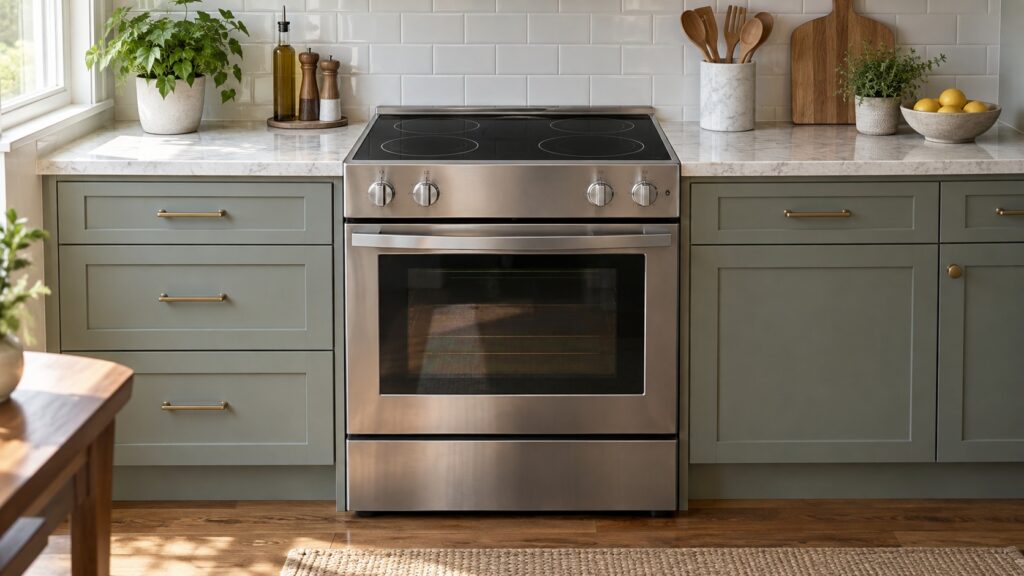
The Electrolux EI30EF range is a family of 30-inch freestanding electric ranges — the EI30EF35JS, EI30EF45QS and EI30EF55GS — sold alongside the gas EI30GF45QS on the same chassis. All of them are discontinued, which is exactly why people look the numbers up: they are buying one used, they have inherited one with a kitchen, or they are deciding whether to keep the one they have. This guide sets out what separates the models, what fails on them, and what to inspect before money changes hands.
Which models make up the Electrolux EI30EF range series?
Read the number and it tells you most of what you need. EI is the Electrolux IQ-Touch tier. The 30 is the width in inches — these all drop into a standard 30-inch opening. EF marks a freestanding electric range and GF a freestanding gas one, which is the single most important letter pair in the string. The digits and letters after that separate trim levels and finishes within a model year.
So EI30EF35JS, EI30EF45QS and EI30EF55GS are three electric siblings, and EI30GF45QS is their gas counterpart. Owners frequently type the wrong one into a parts search because only one character differs between an electric and a gas machine that look nearly identical from the front.
How do the three electric models differ?
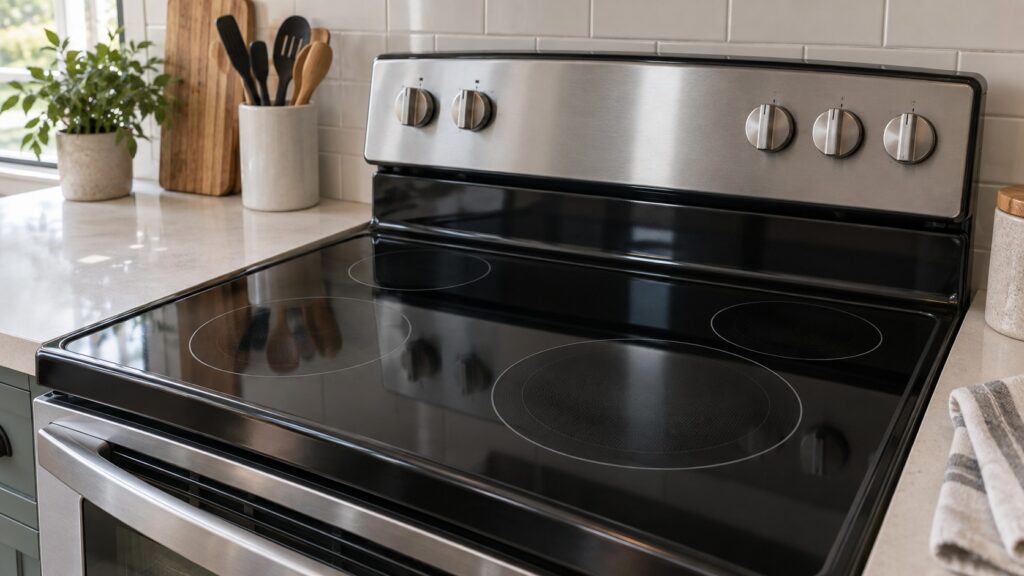
Oven capacity and how the heat is moved. The EI30EF35JS is the largest cavity at 5.8 cu ft, with True Convection — a third element and a fan behind the back wall — plus a cooktop warming zone and a plain storage drawer under the oven. The EI30EF55GS is close behind at 5.7 cu ft with five radiant elements and IQ-Touch controls, but a simpler convection arrangement.
The EI30EF45QS trades cavity size for equipment: a smaller 4.6 cu ft oven, but Dual Convection, a Flex-2-Fit element that changes size to match the pan, a Luxury-Glide rack that rolls rather than scrapes, and Star-K Sabbath mode. That drawer underneath is a heated warming drawer rather than storage, which matters if you were counting on it for pans.
In practice the choice is between a bigger cavity and better racks. The Luxury-Glide rack and the warming drawer are the two features owners mention years later; the extra 1.2 cu ft matters mostly at holidays.
Where does the gas EI30GF45QS fit in?
It is the same cabinet with a 4.5 cu ft gas oven, five sealed burners including a Min-2-Max burner that drops to a genuine low simmer, and Perfect Taste Convection. Our guide on how Perfect Taste Convection works explains what that system does with the air in the cavity.
Two things follow from the fuel. A gas range needs a gas connection and a dedicated 120-volt receptacle, not the 240-volt circuit an electric range needs, so swapping one for the other in an existing kitchen is a plumbing and electrical job rather than a delivery. And the fault list changes completely: igniters and burner caps replace radiant elements and surface relays.
What should you check before buying one used?
- Run every surface element or burner to full and watch for one that lags or cycles oddly.
- Set the oven to 350 and confirm it reaches temperature in a sensible time, then bake something flat and look at the color across the pan.
- Open and close the door: a sagging hinge or a crushed gasket is a heat loss you will chase forever.
- Pull each rack fully out. On a 45QS the Luxury-Glide rails are a specific, findable part, and a bent one is obvious.
- Ask whether self-clean has ever thrown a code. The door-lock family is covered in our Electrolux oven F90 guide.
- Photograph the model and serial label inside the drawer or on the door frame before you leave.
Measure the opening too. Thirty inches nominal is not thirty inches actual in an older kitchen, and countertop overhang and a tile backsplash both eat depth. The installation steps are in our Electrolux range installation guide.
What breaks on these ranges?
After a decade in service the list is short and repeatable. Radiant surface elements open up and stop heating. Surface relays on the control board weld or fail, which reads as a zone that will not switch off or will not come on. Oven temperature sensors drift, and the oven bakes hot or cool by thirty degrees before anyone believes the thermometer. Door hinges sag. On the gas model, igniters weaken until the burner lights late with a thump.
The oven F codes tell you which of those you have. F10 is a safety-critical temperature runaway — disconnect power and stop using the range until it is repaired; our F10 guide covers it. F30 and F31 point at the oven sensor circuit, and the F30 guide takes that one apart.
Is a discontinued range still worth repairing?
Usually, and the reasoning is unglamorous. The parts that fail on this series — elements, sensors, relays, igniters, hinges, lock assemblies — are generic enough that supply has held up well after production ended. A range with a sound cavity, a straight door and working controls is worth a sensor or an element. What changes the math is a failed main control board on a model year with thin availability, or a cracked cooktop on the smoothtop versions, which is one of the few parts that can cost more than the range is worth used.
Keeping one alive is mostly discipline: no standing spills, no foil on the oven floor, and a cavity clean enough that self-clean is rare. Our range maintenance guide has the routine we recommend.
When should you call a technician?
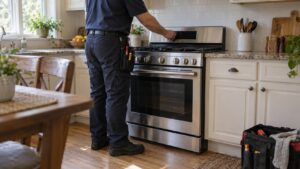
Call before buying if a used machine shows any F code, and after buying if the oven misses temperature, an element stays on, the door will not seal, or a gas burner lights late. Bring the model and serial number to the call: on this series the same part number can differ between the 35JS and the 45QS.
We are an independent repair company and not a factory service arm. Pricing starts from a diagnostic visit and we confirm the estimate before any work begins. Electrolux range repair covers elements, burners, igniters, sensors, door hardware and controls on discontinued models as well as current ones. You can schedule a visit online or call (844) 414-1609.