The Electrolux washer EF0 error — very often typed EFO, with a letter O instead of a zero — appears on the display when the machine has not seen water leave the drum the way it expected. It is a drainage indication, and that is good news: most of what causes it sits in the two places an owner can reach without tools. This guide covers what to check, in the order that resolves the most calls, and what it means when the code returns anyway.
Before anything else: cancel and drain safely
If the drum still has water in it, do not open the door against it. Cancel the cycle and select a drain or spin program; if the machine will not drain, use the emergency drain hose beside the pump filter to empty it into a shallow tray before going further. Front-load machines hold more water than the glass suggests, and the puddle is the reason people abandon this job halfway.
Switch the machine off at the wall before opening any panel. The pump is electrically driven and there is standing water involved; that combination deserves the two seconds it takes.
1. The drain pump filter
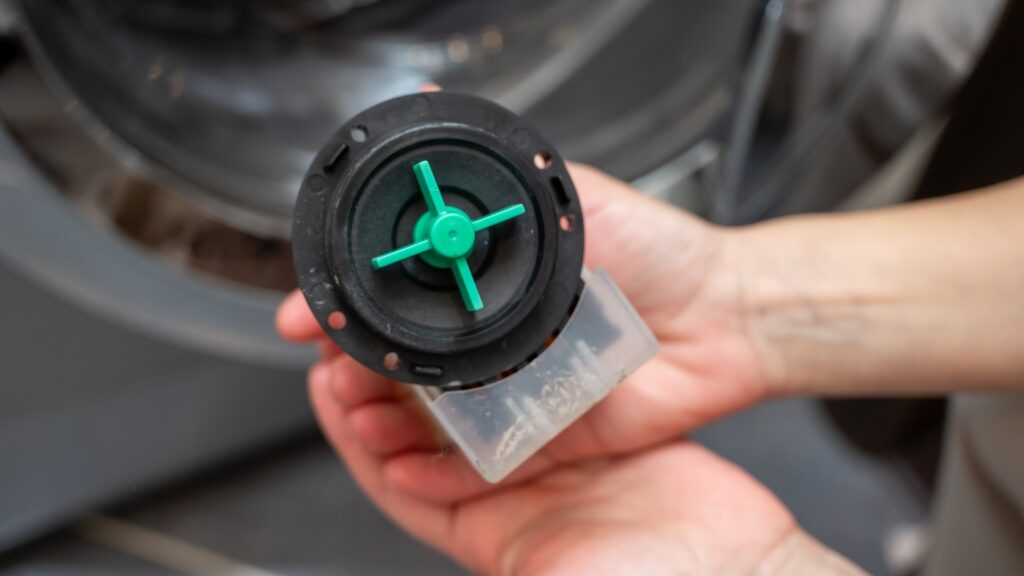
This single check resolves more drainage calls than everything else combined. Behind the lower front panel there is a filter, and it catches coins, buttons, hair clips, pet hair and lint. When it loads up, water still moves — slowly — and the machine eventually decides drainage has failed.
- Open the lower panel. Place a shallow tray and towels; water will come out.
- Drain through the emergency hose first if there is one.
- Unscrew the filter, remove it, clear it under a tap, and check the housing behind it with a finger for anything lodged.
- Turn the impeller behind the filter by hand. It should move freely. If it is stiff or jammed, something is wound around it.
- Refit the filter properly — hand tight, seated, not cross-threaded. A filter left loose leaks on the next cycle and is regularly mistaken for a pump failure.
Our page on the washer not draining covers the same access in more detail.
2. The drain hose and where it goes
Three things about the hose produce this code on a machine that is otherwise healthy:
- A kink. Behind the machine, where it was pushed back against the wall. Pull the washer forward and look rather than reaching blindly.
- Standpipe height. Too high and the pump cannot lift the water; too low and the machine siphons, emptying as it fills. The instructions state a range, and the range is a real specification.
- Pushed in too far. A hose inserted deep into a standpipe creates a seal and then a siphon. It should go in far enough to stay put and no further.
If the washer drains into a sink trap shared with a garbage disposal, check the disposal is clear and that the knockout plug was removed when it was installed. A blocked shared drain gives exactly this symptom and is not a washer fault at all.
3. Detergent and foam
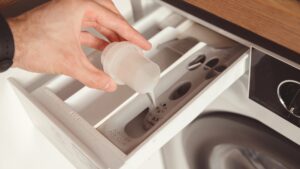
A drum full of foam is water the pump cannot move. Foam also fools level sensing, so the machine believes water is still present after the pump has done its job.
Our page on the washer maintenance routine covers dosing and the monthly drum clean that keeps residue from building in the first place.
When it comes back anyway
If the filter was clean, the hose is correct and detergent has been reduced, and the code still appears, the remaining candidates need measurement rather than guessing:
- The drain pump itself — running weakly, or not running at all. Often audible: listen for it during the drain step.
- The pressure sensing system — the machine reads water level through a small hose that can block with residue, and a blocked one leaves the machine believing the drum is never empty.
- Wiring or the control output that drives the pump.
- A partial blockage in the sump beyond the filter housing.
What to note before booking a visit
Four facts make the visit shorter and the estimate firmer, and all of them are free to collect: the model and serial from the plate, the exact characters on the display, whether the code appears on every cycle or only on some, and whether the drum has water in it when it appears. That last one splits the problem in half — water still present points at the pump and the path, while an empty drum with a code points at sensing.
Also worth noting: anything that changed recently. A new detergent, a move, plumbing work in the house, or a first wash after the machine was pushed back against the wall. Drainage faults are frequently installation faults with a delay, and the thing that changed is usually the answer.
A note on the code itself
Codes are not universal, on this brand or any other. The same short display can mean different things on a different appliance type and on a different generation of the same machine, so the model number on the plate — inside the door opening, or on the rear panel — decides which documentation applies. If the display is showing something adjacent, our pages on the E11 code and the E13 code cover the fill and leak indications respectively, which are different faults with different checks.
When to call
Call when the code returns after a clean filter, a verified hose and reduced detergent; when the pump is silent during the drain step; when water is standing in the drum at the end of every cycle; or when the machine leaks while draining.
We are an independent repair company and not a factory service arm. Pricing starts from a diagnostic visit and we confirm the estimate before any work begins. Electrolux washer repair covers pumps, valves, sensors, motors and controls, and you can schedule a visit online.