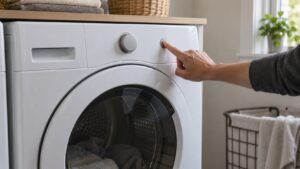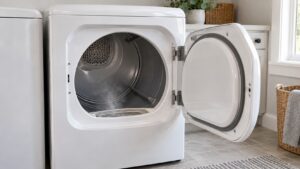
Electrolux dryer installation has four owner-level parts: choosing a spot where the exhaust duct can run short and straight to the outside, leaving the clearances your installation instructions call for, connecting the duct without kinks, and leveling the dryer so it does not rock. The electrical hookup on an electric model and the gas connection on a gas model are not part of that list; they belong to a licensed electrician or gas fitter. Read the installation sheet for your exact model before you start.
Where should an Electrolux dryer go?
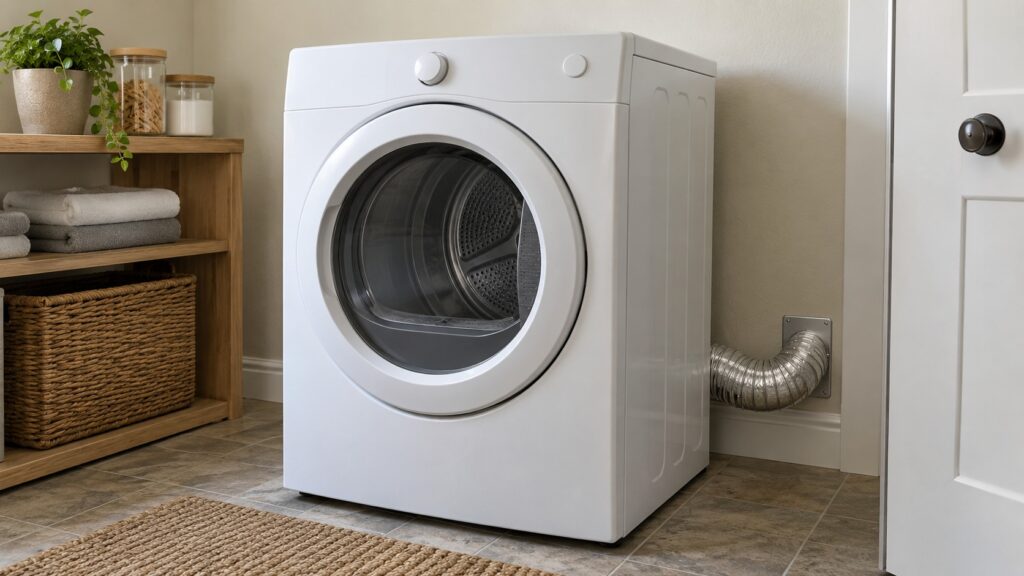
Choose a spot that is close to an exterior wall, has a firm level floor and lets the door open fully. Our Electrolux dryer page says the line-up is 27-inch electric ELFE and gas ELFG machines plus a 24-inch ventless ELFE4222AW, and that the vented models need an exhaust duct to the outside. The distance to that exit matters more than anything else: our vent guide describes a long or bent duct run, especially with sharp 90-degree turns, as extra resistance the fan has to work against. Leave the space behind and beside the dryer that the installation instructions specify; we do not give a clearance number here, because it depends on the model and on local code.
How do you plan the vent?
Keep the duct as short and straight as you can and avoid kinks and crushed sections, which restrict airflow. Our dryer takes too long guide lists a clogged lint screen, a blocked outside vent and a kinked duct as the usual reasons for slow drying, and our EF1 page lists a blocked exhaust duct and an obstructed outside hood, such as a bird nest, debris or a flap that has stuck shut. Plan the exit with that in mind: the outside hood should open freely and be easy to reach for cleaning. Your installation instructions give the maximum duct length and the allowance for bends; follow them, because the safe numbers depend on the model. If the run cannot be short and straight, consider asking a professional how to route it.
What about the electrical or gas connection?
Leave it to the licensed trades. Our dryer page says an electric model needs its 240V supply checked first on a no-heat call, and a gas model almost always comes down to the igniter, which tells you these are two different systems. An electric ELFE needs the right supply, outlet and cord for the model, and a gas ELFG needs the right gas connection made and tested for leaks. Do not improvise either one, do not swap a cord from another dryer and do not run a gas line yourself. If you ever smell gas, do not turn anything on or off, do not light anything; leave the house and call the gas service or 911 from outside.
How do you move the dryer into place safely?
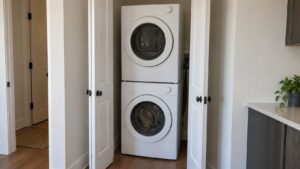
Dryers are heavy and awkward, so use a helper and protect the floor. Keep the dryer’s power off at the breaker while you move it. If it is a gas ELFG, do not slide it out or move it yourself: the gas connector and shutoff belong to the gas fitter, and a strained or kinked line is a leak risk. Do not push the dryer against the duct; a crushed duct behind the dryer is one of the most common installation mistakes. Connect the duct to the dryer outlet and to the wall duct first, then slide the dryer into position with enough slack not to pinch the duct. If it will be stacked or paired with a washer, follow the instructions for that kit; do not stack a dryer unless the manual says your model can be stacked.
How do you level the dryer?
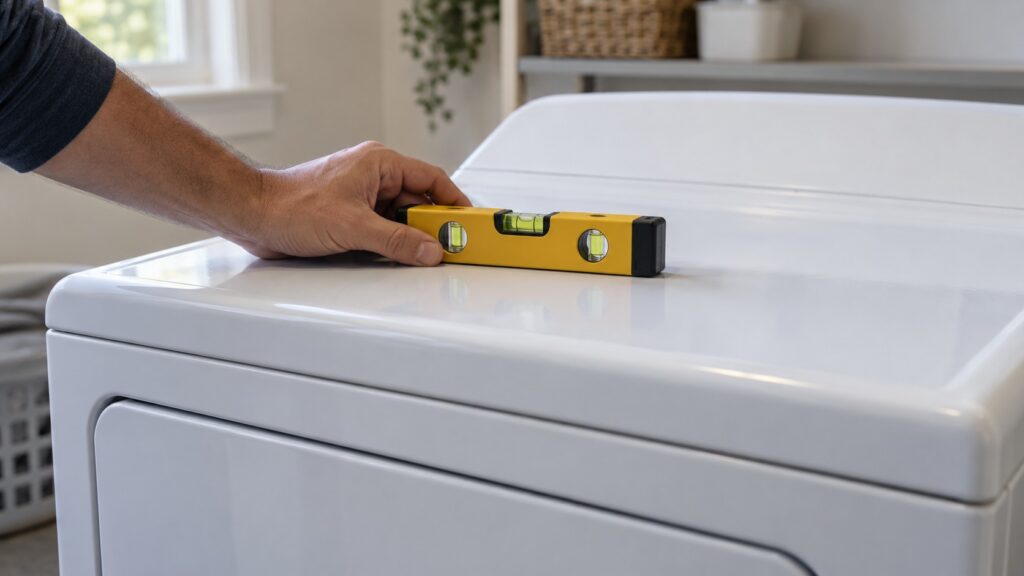
Set a small level on the top surface, check front to back and side to side, and adjust the feet as the installation instructions show until it sits steady. A dryer that rocks is noisy and puts uneven stress on the machine. After leveling, push on the corners; it should not rock. Our washer maintenance guide makes the same point about keeping a front-load washer level so it does not rock and stress the tub, and it applies to a matching dryer, too.
What should you check on the first load?
Run a short test load. Watch that the dryer tumbles, that warm moist air actually leaves through the outside hood, and that the hood flap opens. If the air is weak or the clothes stay damp, shut the dryer off and look at the duct for kinks before you do anything else. Check the lint screen before every load from the start, and plan to clean the whole vent run at least once a year; our dryer vent cleaning guide explains how. If the dryer does not heat on the first day, see our dryer not heating guide, and have the electrician or gas fitter back before you start taking things apart.