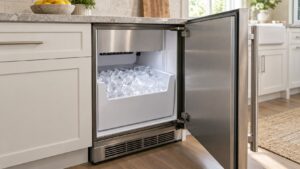
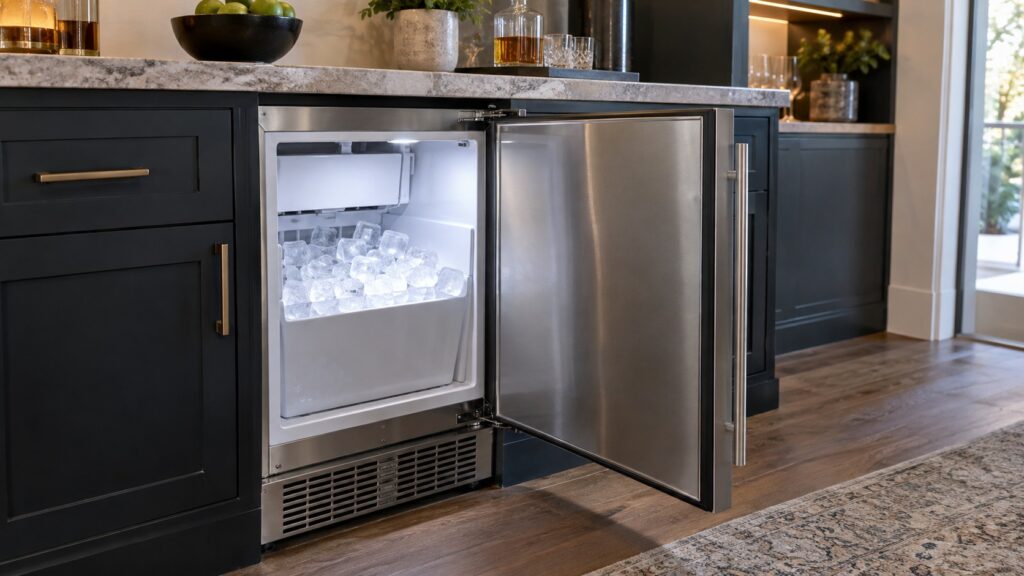
How an Electrolux ice maker works comes down to a short cycle it repeats all day: it pulls in a measured amount of water, chills a cold surface until the water freezes into ice, releases the ice into a storage bin, and stops when a sensor says the bin is full. Every complaint, such as slow ice, small or hollow cubes, ice that jams or no ice at all, is a failure at one step of that cycle, and the cycle has only four steps to check. Knowing the steps lets you describe the problem to a technician and check the easy causes first.
How does an Electrolux ice maker make ice?
The ice maker is a small refrigeration system built around one cold surface. A water inlet valve opens and lets a measured amount of water into a reservoir or onto a freezing surface. The refrigeration system, which is a compressor, condenser and evaporator like any refrigerator, chills that surface below freezing. Water freezes onto it in layers. When the sensor or timer decides the ice is thick enough, the machine harvests: it briefly warms the surface or moves the ice so the batch releases and drops into the bin, and the cycle starts over. The undercounter models on our site rate their output in pounds per day, such as 34 pounds on the UR15IM20RS and 60 pounds on the E15IM60EPS, and hold 30 pounds in the bin.
Pounds per day is a best-case number. It is reached at cool room temperature and cold incoming water; a warm kitchen or warm supply water slows the freeze and lowers the output. That is the first thing to remember when ice seems slow.
What does the water system do?
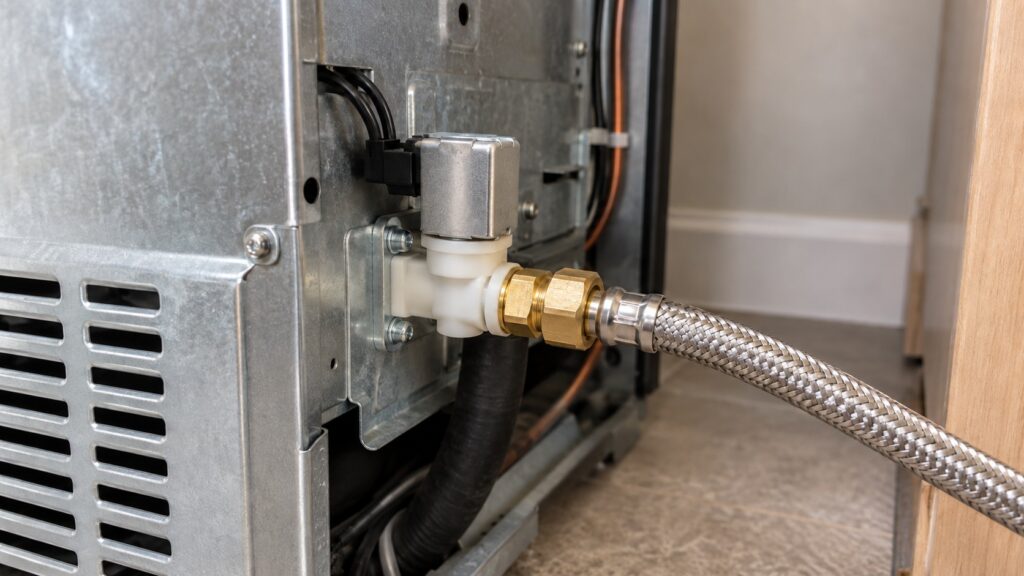
Three parts handle water: the inlet valve, the reservoir or sump, and the drain. The inlet valve opens only when the control calls for water, and its small screen can clog with sediment. The sump holds the water that is frozen or circulated. The drain removes melt water and, on many models, flushes the sump on a schedule so minerals do not build up. A kinked supply line, a closed shutoff valve or a blocked drain all show up as an ice maker that stops or leaks. Our ice maker leaking page explains the leak side, and the quality of the water you supply decides how clear, hard and clean-tasting the ice is.
How does it know the bin is full?
A sensing element, usually a bin sensor or a switch, watches the level of ice. When ice rises to the sensor, the machine stops making more. When you scoop ice and the level drops, it starts again. This explains a frequent false alarm: an ice maker that stops producing may not be broken, just reading a full bin, because a mound of ice sits under the sensor. Level the pile with a scoop before concluding that production has failed. It also explains why ice production is slow when a bin sensor is dirty or misplaced.
Why does ice come out small, hollow or in clumps?
Because one step of the cycle shortened. Our model pages list four related symptoms. Small or hollow cubes mean the freeze did not run long enough, often from low water supply, a partly clogged inlet or warm surroundings. Slow production means the whole cycle takes longer than it should, which a dirty condenser or warm room causes. Ice that is frozen up or jammed, listed on our pages as ice clumped around the auger, means ice fused together or got stuck during harvest, often after a power loss or when ice sat in a warm bin and refroze. Bad-tasting ice usually comes from old water, a spent filter, or a machine overdue for cleaning.
The most useful routine is covered in our Electrolux ice maker maintenance guide, which explains cleaning and descaling. For the not-making-ice symptom, see why an Electrolux ice maker stops making ice.
What does the refrigeration side do?
The refrigeration system is why an ice maker needs ventilation. A compressor and condenser remove heat from the freezing surface and release it into the room, so a condenser clogged with dust or a machine installed without airflow overheats and slows. Undercounter units normally breathe through the front grille. Keep it clear, and vacuum the grille and condenser at the intervals the manual lists. If the compressor runs but no ice forms, or the unit does not run at all, the problem is no longer water-side and needs a technician. A technician can check refrigerant pressures and the sealed system, which cannot be done safely at home.
How do I use this to troubleshoot?
Keep the order of the cycle in mind: water in, freeze, harvest, bin check. A problem that appears at one step rarely comes from another, so you can usually narrow it with one or two observations before touching anything.
Match the symptom to the step. No ice at all: check power, water supply and the bin sensor first. Slow ice: check room temperature and the condenser. Hollow cubes: check water supply and the inlet screen. Leaks: check the drain and the door seal. If you are shopping, read our Electrolux ice maker buying guide. For a unit that needs work, Electrolux ice maker repair covers the models above, and you can schedule a visit.