Deciding on an Electrolux microwave repair is unlike deciding on any other appliance, for one reason: the two most common failures sit at opposite ends of the price range, and they look identical from the kitchen. A microwave that hums and does not heat can be a cheap part or an expensive one, and the only way to know is to measure. This guide sets out what typically fails, what it means for the decision, and where a built-in or over-the-range unit changes the arithmetic entirely.
The safety point, stated once and plainly
A microwave’s high-voltage capacitor can hold a dangerous charge long after the appliance is unplugged, and discharging it safely requires knowing exactly what you are doing. Every other appliance in a kitchen can be opened by a careful owner for a look. This one cannot. Do not remove the cabinet, and do not follow a video that suggests otherwise.
What you can safely do: check the outlet with another appliance, check the door closes and latches properly, check the turntable and its coupler, clean the interior, and note exactly what the unit does and does not do. That is enough for us to bring the right parts.
What usually fails, and what it costs to put right
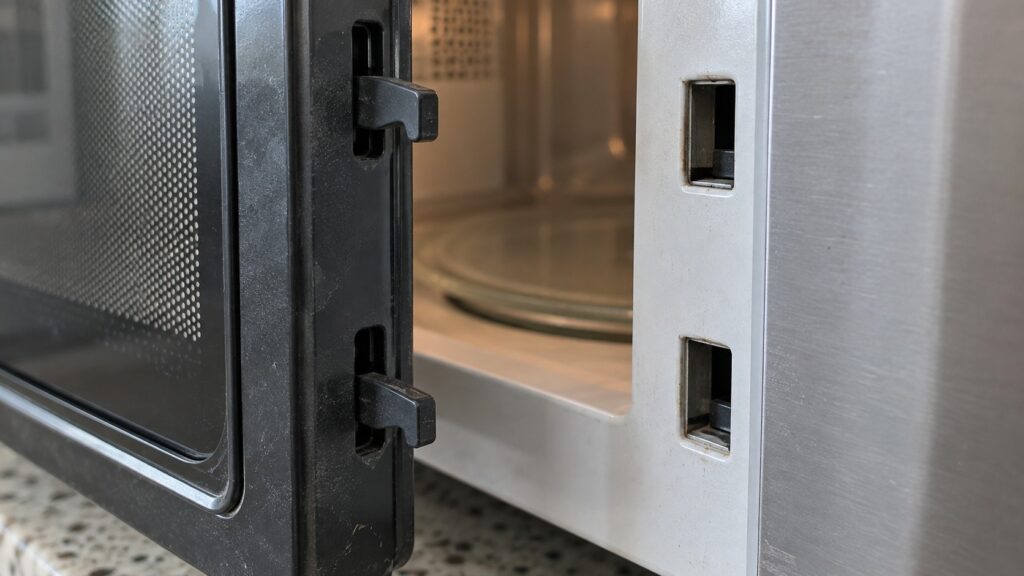
Door switches. Several interlock switches confirm the door is shut, and they are among the most-cycled parts in the appliance. A failed one gives a unit that will not start, or one that runs the fan and light but does not heat. Inexpensive part, straightforward job.
The fuse. Often blown by a door switch failing, which is why replacing the fuse alone leads to a second failure a week later. A proper repair finds why it went.
Turntable motor or coupler. Cheap, and often not a motor at all — the coupler under the tray wears or the roller ring is dirty. Our page on the turntable not turning covers the checks.
The magnetron. The part that generates the microwaves. This is the expensive one, and a failed magnetron on a modest appliance is usually where replacement wins. Our page on the microwave not heating covers how the symptom presents.
High-voltage diode or capacitor. Mid-range parts, and a common cause of a loud hum with no heating.
Control board. Varies widely. On a built-in unit it is usually still worth it; on a countertop unit it rarely is.
The vent fan and grease filters on over-the-range units. Mechanical, accessible, and frequently the actual complaint — see our microwave venting tips.
Where the appliance is fitted changes everything
This is the part people underestimate. A countertop microwave is a commodity: when it fails, replacing it is usually cheaper than a visit plus parts, and nothing in the kitchen has to change.
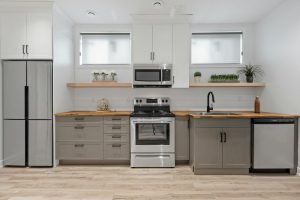
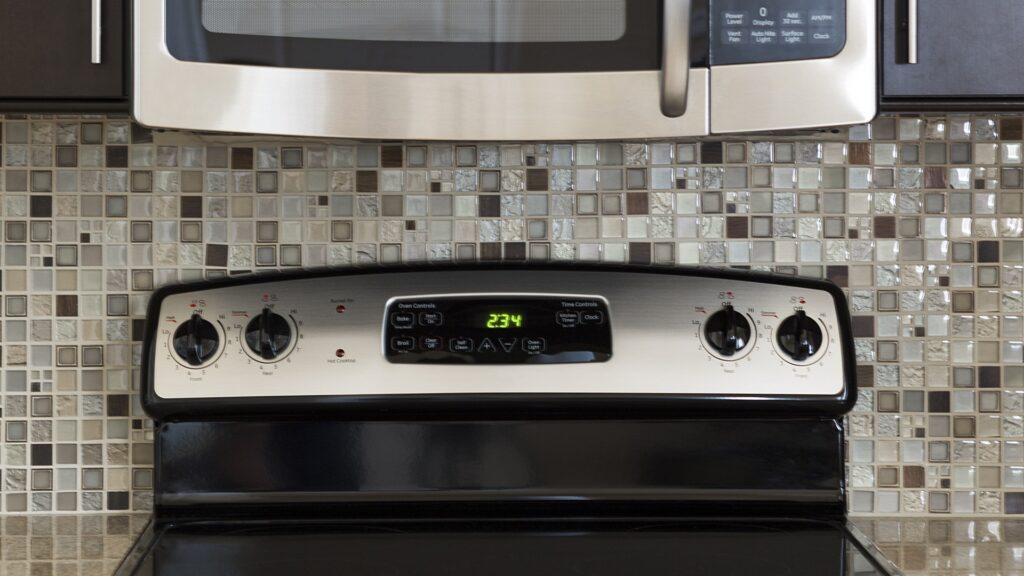
An over-the-range unit is a fitted appliance. It hangs on a bracket, it uses a cutout, and it is ducted — either outside, or recirculating through a charcoal filter. Replacing it means matching width, height, mounting and the duct arrangement, and a replacement that does not match means cabinet work. At that point a repair that would be marginal on a countertop unit is clearly the better value.
A built-in or drawer unit is the extreme case. It lives in a cabinet opening built for it, often paired visually with an adjacent oven, and a replacement has to match the opening and the trim kit. Households in this situation regularly find the exact model is discontinued and the nearest equivalent needs the cabinetry altered. Repair is almost always the better answer.
Age, and when it stops mattering
The faults that mean stop using it
Three symptoms are not repair-or-replace questions at all. Arcing or sparking inside the cavity — often a damaged waveguide cover, sometimes metal in the oven, occasionally something worse. A door that does not latch or close flush, which is the safety barrier itself. Visible damage to the door, its seal or the perforated screen. In all three cases unplug the appliance and stop using it until it has been looked at.
A microwave that hums loudly and does nothing else can be run once to confirm the symptom and then left alone. There is no benefit to repeating it.
What we do on the visit
We start with the outlet and the door system, because those cover the cheap causes, then measure the high-voltage side to separate a diode or capacitor from a magnetron. That measurement is the whole decision: it is the difference between a modest repair and a figure that sends most countertop units to the curb.
You get the estimate and the honest comparison — including “this one is not worth repairing” when that is the answer — before anything is ordered. Our page on microwave maintenance covers what keeps the next one alive longer, and most of it is keeping the door and its seal clean.
When to call
Call when the unit hums without heating, when it will not start with a properly closed door, when the display is dead, when the vent fan has stopped on an over-the-range unit, or when you want a built-in unit assessed before assuming it has to be replaced. Stop using it and call sooner if there is arcing or the door will not latch.
We are an independent repair company and not a factory service arm. Pricing starts from a diagnostic visit and we confirm the estimate before any work begins. Electrolux microwave repair covers door systems, magnetrons, diodes, fans and controls, and you can schedule a visit online.