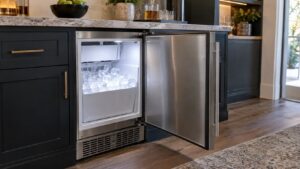
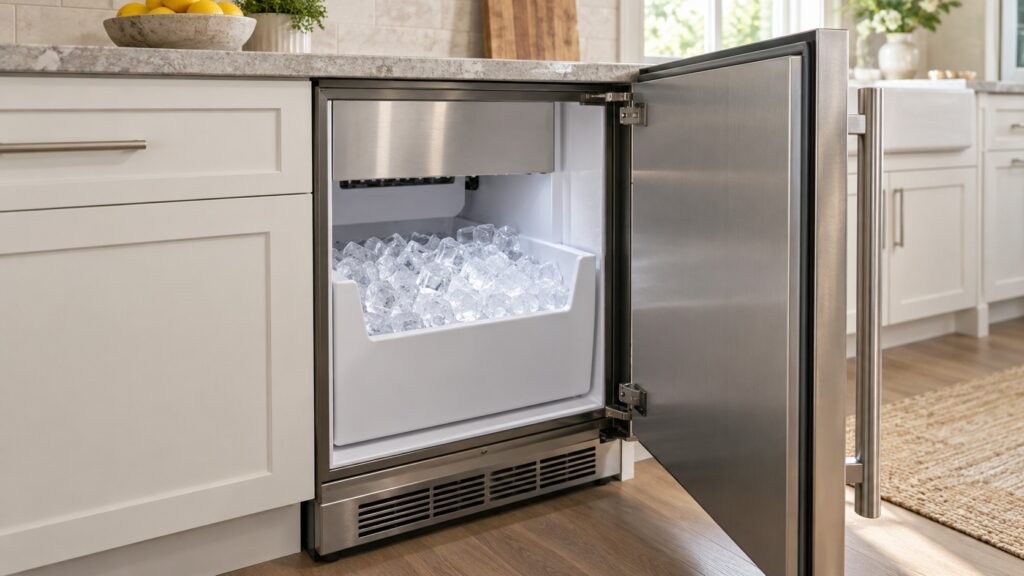
The short answer to “electrolux ice maker how to use” is to let the undercounter unit run, take ice out with a clean scoop, and use it regularly so the cubes do not clump into one mass. Keep the area around the cabinet clear for airflow, replace any inline water filter on schedule, and read your owner’s manual for how to turn the unit on and off and for the settings on your exact model, because the control layout is not the same across the lineup.
How do you start and use an Electrolux undercounter ice maker?
An Electrolux ice maker is a built-in, plumbed appliance, so the first job is making sure it has water: the shutoff valve behind the cabinet fully open and the supply line unkinked. After that, follow the start-up steps in your owner’s manual. We do not describe a button sequence here, because the control, the display and the way you turn production on or off are not the same on the E15IM60 series as on the UL and UR models. The manual also tells you whether to throw away the first ice after installation or after a filter change; follow it rather than guessing. Once the unit is making ice, the everyday routine is simple: take ice from the bin, close the door fully, and leave it alone.
What does Crystal Clear Ice mean for the cubes you get?
Our ice maker page says Electrolux undercounter units are built around Crystal Clear Ice, which slow-freezes water to push out air and minerals so the cubes are denser and clearer than the ones a standard refrigerator ice maker makes. In daily use this means slower, steadier production than a refrigerator in the door, so plan for it. If you are about to host a crowd, check the bin the day before rather than expecting a quick refill. The site lists up to 60 pounds per day on the E15IM60 models and up to 34 pounds per day on the UL15IM20RS and UR15IM20RS, each with 30 pounds of storage. Our ice maker buying guide compares them if you are still choosing.
How should you take ice out of the bin?
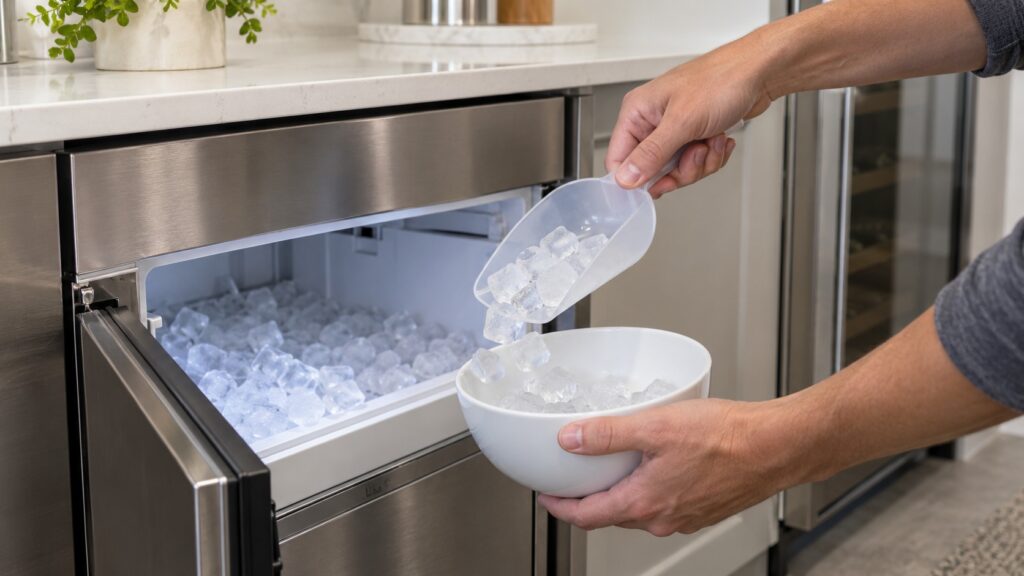
Use a clean plastic scoop or the scoop supplied with the unit, and lift ice from the top of the pile. Do not use a drinking glass to scoop, because glass can chip against hard ice, and do not reach in with unwashed hands. Close the door fully every time; a door left ajar lets warm, humid air in, which melts the surface of the ice and can make it refreeze into clumps. Our site also notes that a frozen-up or jammed unit usually has ice clumped too large for the auger from infrequent use, or ice that melted and refroze around the mechanism after a temperature swing or power outage. Scooping from the top and using the ice regularly is the simplest way to avoid that.
What do Delay Mode and Energy Saving Mode do?
The UL15IM20RS and UR15IM20RS pages list Delay Mode and Energy Saving Mode, described as features for quieter, lower-draw operation. In general terms, a delay feature on an ice maker postpones production to a later time, and an energy-saving feature reduces how hard the unit works; but what each mode does on your exact model, how you set it and what it changes about ice output is in your owner’s manual and we cannot confirm the details from the site. The newer E15IM60 series pages mention a Blue LED Display for status and settings. If the unit stops making ice and you have recently used one of these modes, check the setting before you suspect a fault.
What habits keep the ice clean and the unit running?
Our ice maker maintenance guide gives the routine: clean the condenser vent or coil at the base every few months, sanitize the bin periodically with a mild solution recommended by the manufacturer, replace any inline water filter on schedule, and keep ventilation clearance around the cabinet free of newly stored items. The ice maker page adds that a filter overdue for replacement, roughly every six months, or mineral buildup in the bin and chute is the usual cause of ice that tastes bad or looks dirty. Tip out and wash the bin if the ice has sat unused for a long time, for example after a vacation. Do not use sharp tools to break up clumps, and do not force the auger.
What if the ice maker stops making ice or the ice looks wrong?
Check the simple things first: the water valve, the line for kinks, the filter and the clearance around the cabinet. The site lists a clogged or expired filter, a faulty inlet valve, low water pressure and a unit running warmer than its ideal range as the usual causes of no ice, and low pressure as the most common reason for small or hollow cubes. Our ice maker not making ice guide and the slow ice production page go through the order. If water is on the floor around the unit, switch off the breaker at the panel while standing on a dry floor, and never pull a plug from a wet outlet. Do not open the cabinet to look at the water path; that is a technician’s job.