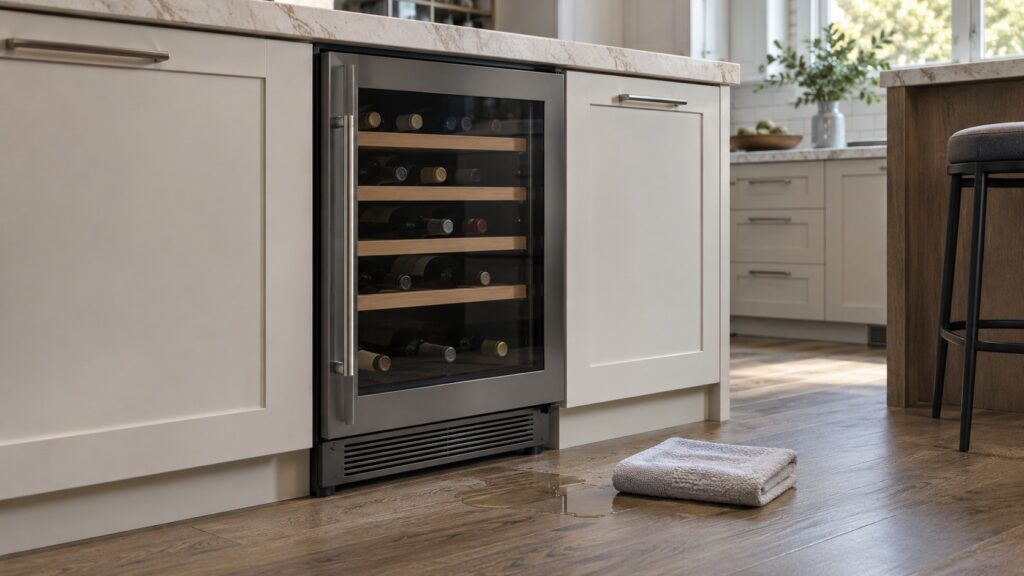
An Electrolux wine refrigerator leak almost always comes from moisture, not from a failed pipe: the unit makes condensation or frost inside, and the water finds its way out through a door that does not seal, a drain path that is blocked, or a cabinet that is not level. A wine refrigerator has no water supply line, so a puddle on the floor is melted frost, condensation from humid room air or spilled water from a tilted or overfilled path. Check the door seal, the clearance around the unit and the way the cabinet sits before anything else.
Why is your Electrolux wine refrigerator leaking water?
Start by deciding where the water comes from. Dry the floor and the inside of the cabinet, then watch for a day. Water at the lower edge of the door points to the seal. Beads on the shelves and the glass point to humidity in the cabinet. Water that appears after the unit has been off for a while is melted frost. On this site, the symptom page for the Electrolux wine refrigeration door seal and leak puts a worn, cracked or torn gasket first on the list, and the page on condensation and frost buildup puts poor ventilation clearance and a damaged seal at the top. Both pages agree on the starting point: the door and the air around the unit.
Because water and household electricity sit close together, look first at where the water is. If it reaches the outlet or the cord, switch off the breaker that feeds the unit from the panel while standing on a dry floor, and do not pull the plug out of a wet outlet; if you cannot reach the panel safely, stay back and call an electrician. If the floor is wet but the outlet is dry, mop it up before it spreads.
Is the door seal letting in humid air?
This is the most common cause. A gasket that is worn, cracked or torn lets room air into the cabinet, and the moisture in that air condenses on the cold surfaces and drips. A gasket that was recently replaced but not seated fully in its channel does the same. Look for a visible gap between the door and the cabinet, a door that sits slightly out of line when closed, and condensation or frost near the door edges. Run a paper test around the whole perimeter: close a strip of paper in the door and pull it out at each point, and any spot where it slides out freely is a weak spot.
Clean the gasket and the frame with mild soap and water, not harsh chemicals, since chemical damage is one of the causes on the symptom page. A worn gasket is described there as an owner-replaceable part that needs no special tools. For more on this symptom, see wine refrigeration door seal leak.
Could condensation or frost be the source?
Yes. Moisture beads on the shelves and the glass, and light frost on the rear wall can melt and run down. Some of this is normal: our page on condensation and frost buildup says light rear-wall frost that melts off during the unit’s off-cycle is a normal part of operation. What is not normal is heavy buildup or water that reaches the floor. Common triggers there are restricted airflow, a damaged seal, a humid room and frequent, long door openings. If the buildup is heavy, power the unit off, remove the frost, dry the interior with the door left open and then restart. Read the page on wine refrigeration condensation or frost buildup for the details.
Does ventilation clearance matter?
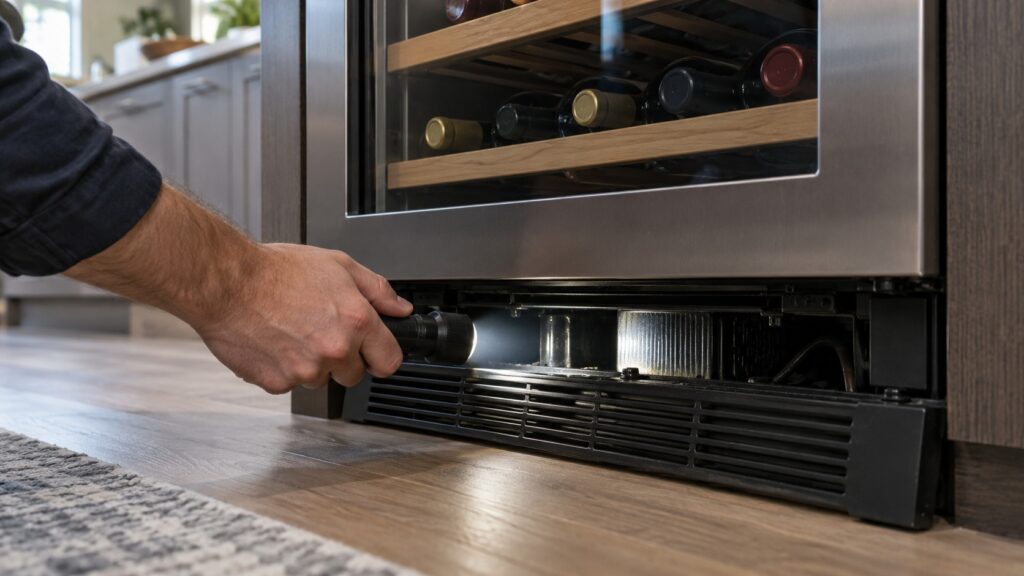
It matters more than most owners expect. A built-in or under-counter wine refrigerator that is pushed into a tight space, or that has a bottom grille blocked by boxes or a mat, cannot manage the humidity in the cabinet. Check that the clearances in the installation instructions are met, that the grille is clear and that nothing leans against the unit. Our Electrolux wine refrigeration installation requirements guide describes the space the unit needs, and the maintenance guide covers the cleaning that keeps airflow open.
Is the unit level, and is there a drain path?
A wine refrigerator that tilts forward or back can send meltwater and condensation to the wrong edge. Check with a level on the shelf and adjust the feet as the manual describes. Some units also have a drain path or a pan for meltwater; the exact arrangement differs by model, so check your owner’s manual for how yours handles water, and do not remove panels to look. If the manual shows a part you can reach, such as a tray, clean it with warm water and dry it before the unit runs again.
When should you call a technician?
Call if water keeps returning after you have sealed, cleared and leveled the unit, if the water reaches the electrical parts, if the compressor runs without stopping or if the wine is warm. A leak with a unit that is not cooling is a different job; see our guide to Electrolux wine cooler not cooling. Our Electrolux wine refrigeration repair service can pinpoint the source, and the visit tells you plainly whether the repair is worth it. Move the bottles to a cool, dark place meanwhile.