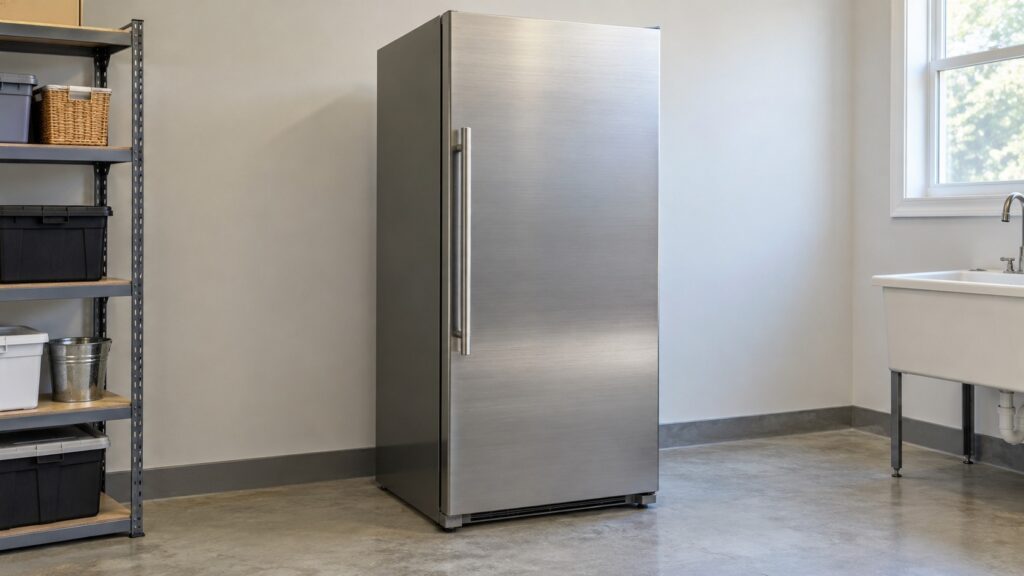
Electrolux upright freezer installation comes down to six decisions made before the freezer is switched on: where it stands, how much room it has, what power it gets, whether it is level, whether an ice maker needs a water line, and how long it rests before you load food. The models we see most are the frost-free EILFU17GS and EILFU21GS uprights, and the older EI32AF80QS upright and EI33AF80WS built-in column. They differ in size, but a good installation follows the same pattern for all of them, and doing it carefully the first time avoids most of the callbacks we get about freezers that run constantly or frost up in the first month.
Where should an Electrolux upright freezer go?
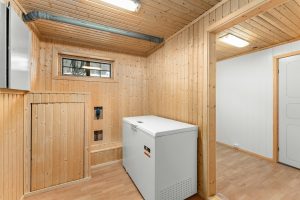
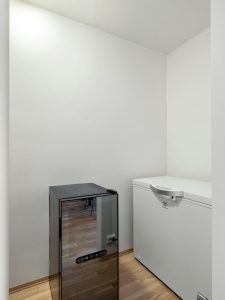
Choose a spot that is dry, indoors, on a floor that is flat and strong enough. A 20 cubic foot freezer weighs a good deal even empty, and it weighs far more when it is full of food. Keep it away from the oven, the dishwasher vent, a radiator and direct sun, because every degree of extra heat around the condenser makes the compressor run longer. Be careful about unheated garages and porches: a freezer is built to run at household temperatures, so check your manual for the ambient range it is rated for before putting it anywhere that gets very hot or very cold.
Think about the door as well. An upright freezer has a full-height door that needs room to swing beyond ninety degrees so the shelves and baskets can slide out. Check that the door will clear a wall, a cabinet or a stair rail, and that you can reach the controls without moving something heavy.
How much clearance does it need?
Air needs to move around the cabinet. Your installation sheet lists the gaps for the sides, top and rear, and you should treat them as a minimum, not a suggestion. A freezer pushed tight against a wall cannot shed heat, and the signs are a warm cabinet side, constant running, and a bill that climbs. For a freestanding upright the gaps are small, and a little extra helps. For a built-in column such as the EI33AF80WS, the cabinet opening and the trim around it are set by the manual, so measure the opening against the printed dimensions before the freezer arrives, not after.
Also plan the route. Measure the front door, the hallway turns and any stairs. Move the freezer upright on a hand truck with a second person, never on its side, and never tilt it past the angle the carton shows. Remove packing and tape, and keep any hardware that came inside.
What power and water connections does it need?
The freezer should be plugged into a grounded outlet of the kind your manual states, and it should not share a circuit with a heater or a microwave. Never run it from an extension cord or a plug adapter, and never cut off the grounding pin. A freezer that trips a shared circuit overnight can lose a lot of food before you notice.
The EILFU17GS and EILFU21GS include an automatic ice maker, and the EI33AF80WS has an internal ice maker, so those models also need a cold water supply. Use a shutoff valve and tubing of the type and length in your manual, leave a loop of slack so the freezer can be moved, and keep the tubing away from the compressor area and any sharp edge. Turn the water on slowly and inspect every joint. If you plan to use the freezer before the water line is ready, switch the ice maker off, so it does not try to fill and run dry. Our guide to refrigerator installation and water lines covers the same connection in more detail.
How do you level it and when do you plug it in?
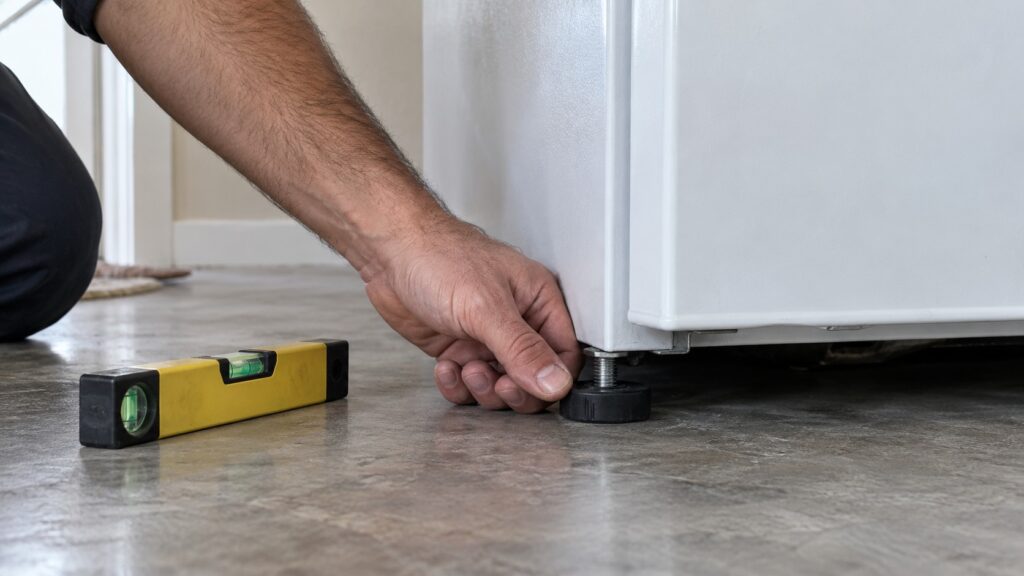
Use the leveling feet at the front to set the cabinet level from side to side and with a slight lean toward the back, so the door swings shut under its own weight. A freezer that leans forward holds its door ajar, and the gasket never seals. Check by opening the door to about halfway and letting go: it should close by itself.
Let the freezer stand upright for the length of time your manual specifies before connecting it, particularly if it traveled on its side at any point, so the compressor oil settles. Then plug it in, set the temperature to 0 degrees Fahrenheit unless the manual says otherwise, and let it run for about a day before you load food. A freezer that has not yet reached temperature cannot protect what you put in it. A cheap appliance thermometer on a middle shelf tells you when it is ready.
What should you check in the first few days?
- Door seal. Close the door on a sheet of paper at several points; it should resist pulling out evenly.
- Noise. A steady hum and a fan are normal, but a rattle usually means a loose panel or a drip tray.
- Water joints. Look under and behind the cabinet the next morning for any drip from the ice maker line.
- Ice. Discard the first batches from a new ice maker and let it run through a few cycles.
- Frost. Light frost near the door is a sign that warm air is getting in; recheck level and seal.
If it runs constantly or frosts up, read our pages on a freezer that is running constantly and on frost buildup. Our freezer organization tips show how to load the shelves and baskets for steady airflow, and freezer maintenance sets out the routine.
When should a technician do it?
Move the freezer and set it level yourself if you are able, but call a professional for the new work: running a water line, adding an outlet, or cabinet work for a built-in column. If the freezer has been installed and does not freeze, or if it shows frost and noise from the start, Electrolux freezer repair can look at it, and we are an independent service, so we will say plainly whether the fault is the installation or the freezer. You can book a visit when you are ready.