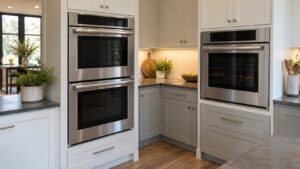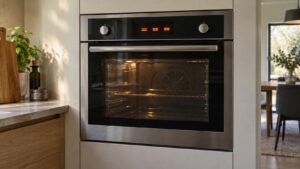
How an Electrolux self-clean oven works comes down to one mechanism: the cavity heats to a temperature high enough to turn baked-on food residue to ash, then the door locks for the whole cycle so no one opens a chamber running well above normal cooking heat. The process is closer to a controlled overheat than to any cleaning product, which is exactly why it changes how several other oven parts behave for a few hours.
How does an Electrolux self-clean oven actually clean the cavity?
The cycle raises the cavity air temperature far past any cooking setting and holds it there long enough that grease, drips and baked-on spills break down into ash instead of char. There is no water, steam or cleaning chemical involved in the pyrolytic version of this cycle — the heat itself is the entire mechanism. Once the cycle ends and the oven has cooled fully, the ash brushes or wipes away easily, which is the one manual step the cycle does not do for you.
Because the temperature involved is so much higher than normal baking or roasting, the oven’s control system treats a self-clean cycle as a distinct mode rather than a longer version of a bake cycle. It runs its own heating pattern, its own fan behavior, and its own safety checks from start to finish.
Why does the oven door lock during self-clean and stay locked?
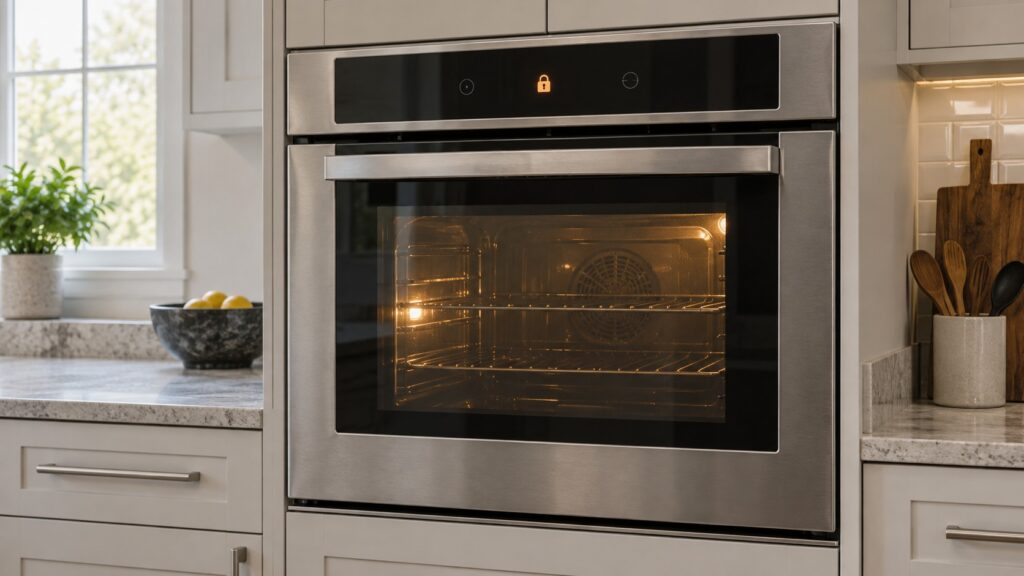
The door lock is a genuine safety interlock, not a convenience feature. Cavity temperatures during self-clean are high enough that an open door would let heat escape unevenly and would expose anyone nearby to a surface far hotter than a cooking oven ever gets. The control locks the door mechanically at the start of the cycle and will not release it until the cavity has cooled to a safe range, and that lock is deliberately built to ignore a power interruption — cutting power does not spring the latch, because the latch is designed to stay closed exactly when someone might be tempted to force it.
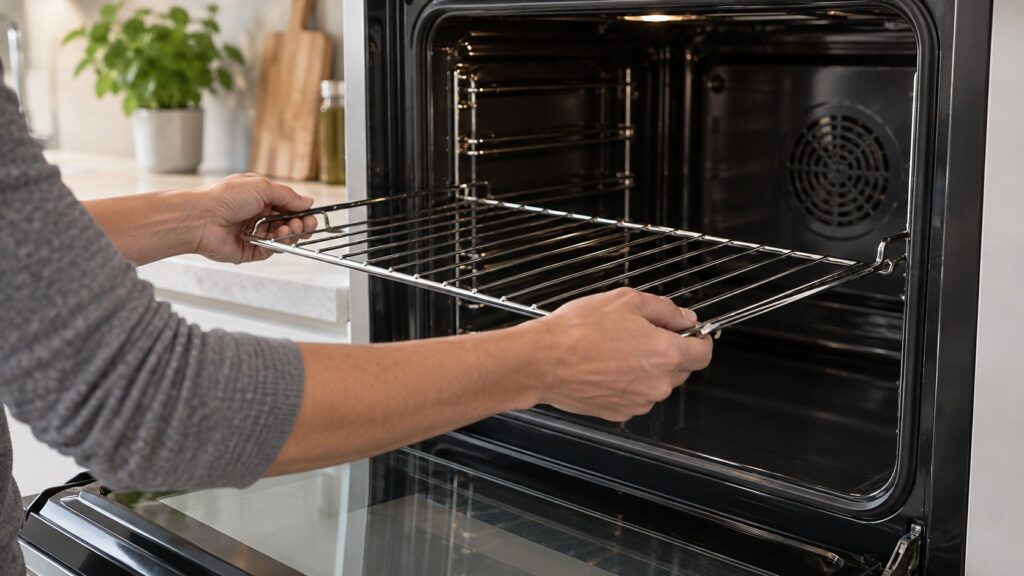
Why do some parts have to come out before running self-clean?
Standard oven racks, temperature probes, and any cookware left inside are usually not rated for self-clean temperatures. Chrome-plated racks in particular can discolor, and probe cables can be damaged permanently at temperatures the cycle is designed to reach. Some Electrolux wall ovens ship with racks rated for self-clean use, and the owner’s manual for that specific model is the only reliable way to know which racks are safe to leave in — when in doubt, taking every rack and probe out before starting is the safer default.
Why does the kitchen smell and warm up during the cycle?
Turning food residue into ash produces smoke and odor as a normal part of the process, and the oven vents some of that through its exhaust path during the cycle. A kitchen that is not well ventilated will notice the smell for the cycle’s full length and sometimes after. This is expected behavior, not a sign the oven is malfunctioning, though a very heavy smell or visible smoke is worth stopping the cycle for and checking that no large spill or dropped item was left in the cavity.
What can go wrong during or after a self-clean cycle?
The most common issue is not a broken part but an oven light or control panel that seems unresponsive for a while — that is normal while the lock is engaged and the display shows a locked-door indicator or a cooldown timer. A genuine problem looks different: the door stays locked well past the cycle’s stated length, or the control shows a fault code instead of a locked-door indicator, or the oven will not heat normally on the next cooking cycle. Any of those is worth reading against the oven’s own error-code page rather than running the self-clean cycle again to test it.
How often should you run a self-clean cycle?
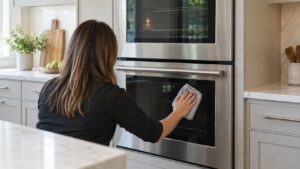
Running it only when there is visible buildup, rather than on a fixed schedule, puts less cumulative heat stress on the door seal and the heating elements. For everyday spills and lighter residue between self-clean cycles, wiping the cavity while it is still just warm — not hot — handles most of the mess without needing the full heat cycle at all.
There is a real trade-off here worth knowing before setting a personal schedule. Running the cycle too rarely lets residue build up thick enough that a single cycle struggles to reduce it all the way to loose ash, sometimes leaving a stubborn baked layer that needs a second run. Running it too often, on the other hand, cycles the door seal and the heating elements through their highest stress point more times than necessary over the oven’s life. Reacting to visible buildup, rather than following a fixed monthly or quarterly habit, tends to land closest to the right frequency for how the oven is actually used.
Do all Electrolux ovens run self-clean the same way?
Not exactly. Some Electrolux wall ovens offer a steam-assisted cleaning option alongside the full pyrolytic cycle, meant for lighter, more frequent cleaning rather than the deep, high-heat cycle described above. A steam cycle runs at a much lower temperature, does not require racks to be removed, and does not lock the door the same way, but it also will not fully break down heavier baked-on residue the way the high-heat cycle does. Checking which cleaning modes a specific model offers, rather than assuming every Electrolux oven only has one self-clean option, avoids running the wrong cycle for the mess actually on hand.
For the manual side of oven care between self-clean runs, see our Electrolux oven self-clean tips. If the oven is not heating evenly even outside a self-clean cycle, our oven not heating evenly guide covers that separately, and our oven F11 error guide covers one of the control faults that can follow a hard self-clean cycle. If the door lock will not release after a completed cycle, schedule Electrolux oven repair or book a visit rather than forcing it.