
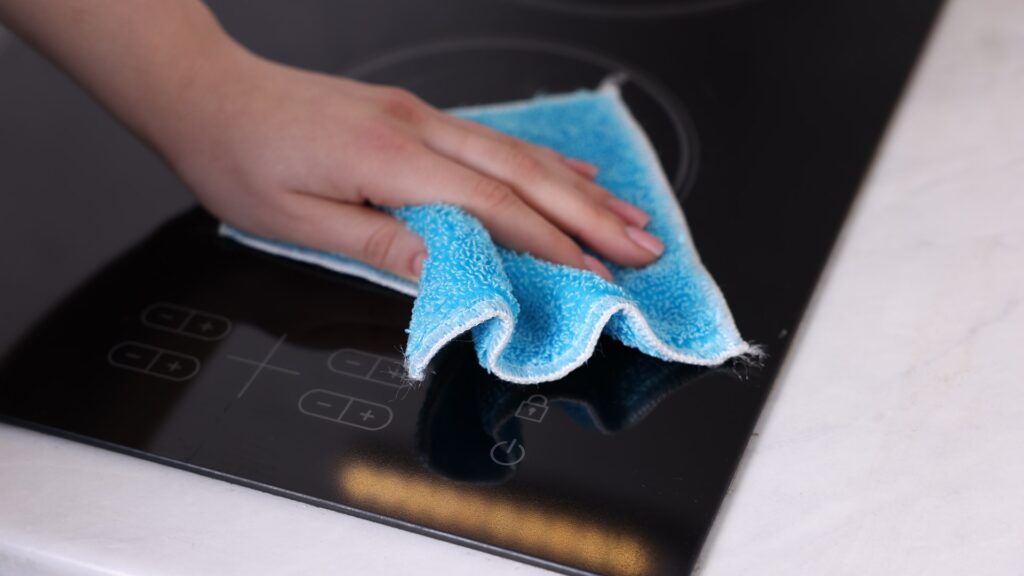
Electrolux glass cooktop care matters more than it looks. The surface looks like a surface that needs nothing and is in fact the surface most often damaged by ordinary use. The glass is strong under weight and vulnerable to three specific things: sugar, abrasion and thermal shock at a chip. Ten minutes of the right habits keeps it looking new for a decade; the wrong ones leave permanent marks in a month. This applies to both radiant and induction surfaces, which are cleaned identically even though they heat completely differently.
Sugar, which is the one genuine emergency
Melted sugar and sugary spills — jam, syrup, a sticky sauce, a boiled-over dessert — react with hot glass-ceramic and pit it. The damage happens while the surface is hot, and it is permanent. Everything else can wait for the cooktop to cool; this cannot.
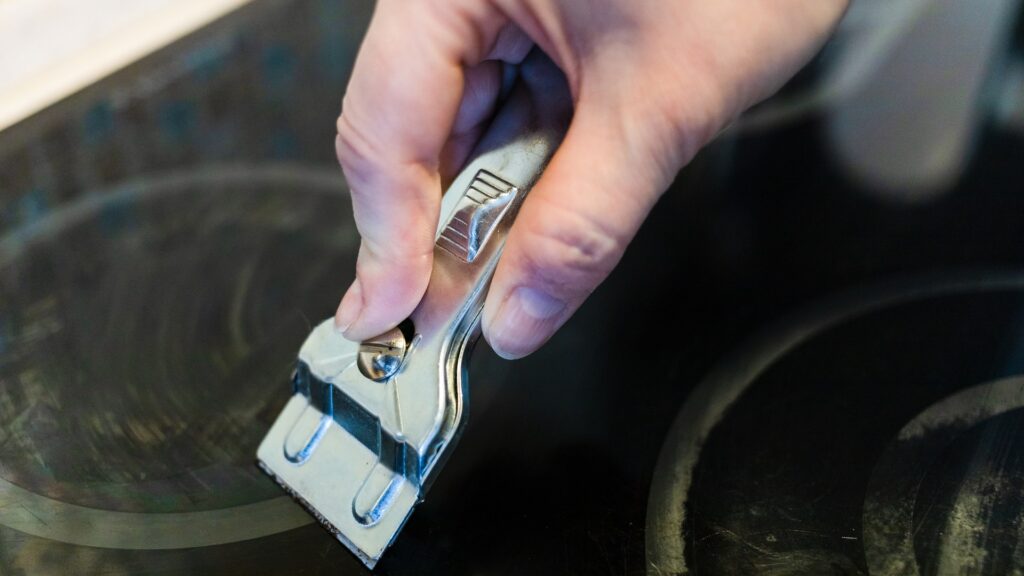
Switch the zone off, and while the surface is still hot use a scraper held at a shallow angle to push the sugar off the glass and onto a cold area or into a cloth. Protect your hand, work quickly and do not use a cloth directly on the hot surface. Once it is off, let the cooktop cool and clean normally.
It is the one case where acting on a hot surface is correct, and it is worth knowing before it happens rather than afterward.
The everyday routine
- Wipe when warm. Not hot enough to burn, not cold enough for spills to harden. Most days this is the whole job.
- Use cooktop cream weekly. A small amount on a soft pad, worked over the surface, then buffed off with a clean dry cloth. The cream is mildly abrasive by design and leaves a film that resists the next spill.
- Use a scraper for the rest. A proper cooktop scraper with a fresh blade, held at a shallow angle, removes burnt-on residue that no cloth will lift. Held upright it will scratch, so the angle matters.
- Buff dry. Water left to evaporate leaves mineral marks that look like scratches in the right light.
What not to use is a shorter list and a more important one: no scouring pads, no scouring powder, no bleach or chlorine cleaner, no oven cleaner, and nothing that says “heavy duty” without saying “for glass cooktops”.
Damage, and what each kind means
A cracked glass cooktop is a genuine hazard on both radiant and induction surfaces: liquid can reach the electronics beneath, and on a radiant surface there are live elements under the glass. It is a replacement job rather than a repair, and continuing to use it is not a reasonable risk.
Two products worth having, and one to avoid
A cooktop cream made for glass-ceramic. Mildly abrasive, and the abrasive is chosen to be softer than the glass, which is exactly what a scouring powder is not.
A cooktop scraper with replaceable blades. A blunt blade needs pressure, and pressure is what turns a scraper into a scratching tool, so change blades rather than pressing harder.
Not a general kitchen spray. Many leave a film that bakes on at the next use and discolors in a ring around the zone. If a cleaner does not name glass cooktops on the label, it is not meant for this surface.
One extra: keep a dedicated cloth for the cooktop. A cloth that has been used on a greasy pan or a gritty countertop carries exactly the particles you are trying to keep off the glass.
Pans, which do more damage than cleaning does
Most scratches come from cookware, not from cloths.
- Lift, never slide. A grain of sugar or salt under a pan base is a cutting tool when the pan is dragged.
- Keep bases clean and flat. A scorched, rough base grinds the surface every time it moves.
- Avoid cast iron for sliding — it is fine to cook on, heavy and rough enough to mark if moved carelessly.
- Do not use the cooktop as a shelf. A dish set down on a cold surface still scratches it.
- Match the pan to the zone, which matters for cooking as well: our page on induction cookware compatibility covers what an induction zone can actually detect.
Induction and radiant, cleaned the same, used differently
The care is identical because the surface is the same material. The behavior is not. A radiant surface stays hot long after the zone is off, so spills continue to bake on and the residual heat indicator matters. An induction surface heats the pan rather than the glass, so the glass is only warmed by the pan above it — which means spills are far less likely to burn on, and the surface is cool enough to wipe much sooner.
One induction-specific point: the cooling fan beneath the glass needs its air path clear, and that path runs through the cabinet below. A blocked intake is an installation matter that presents as a cooktop shutting down under load, covered in our cooktop installation guide and in induction cooktop not heating.
When to call
Call when the glass is chipped or cracked, when a zone stops heating or cuts out under load, when touch controls stop responding on a dry clean surface, when the cooling fan is noisy or silent, or when a spill has run under the edge of the glass.
We are an independent repair company and not a factory service arm. Pricing starts from a diagnostic visit and we confirm the estimate before any work begins. Electrolux cooktop repair covers elements, inverters, touch controls, sensors and wiring, and you can schedule a visit online.